

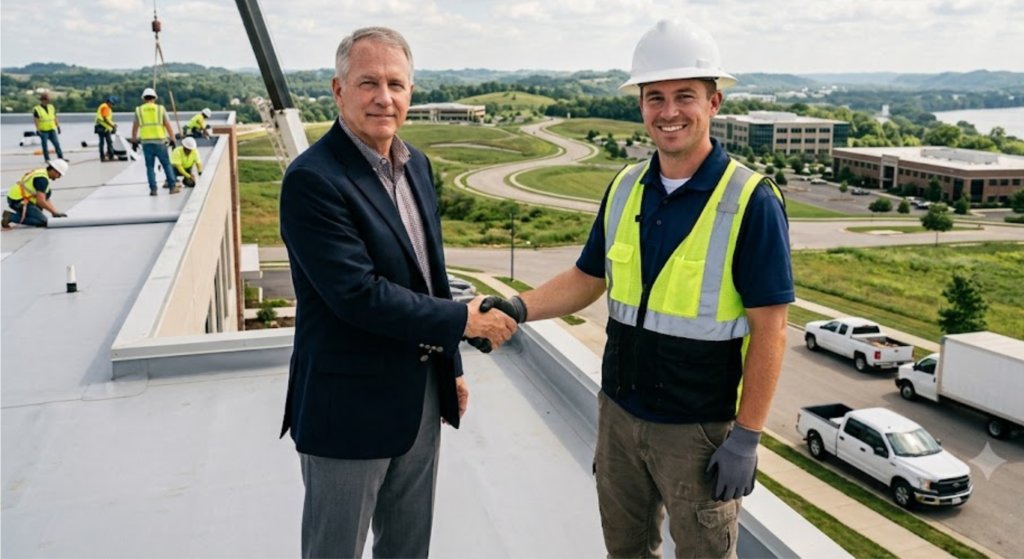
For commercial property owners, facility managers, and real estate investors across Boone, Kenton, and Campbell counties, maintaining the structural integrity of a building is paramount. At the very top of that priority list sits the commercial roofing system. Whether protecting a high-volume logistics warehouse in Florence, a retail plaza in Covington, or an office park in Newport, a commercial roof safeguards vital inventory, expensive equipment, and daily business operations.
When repairs, routine maintenance, or full replacements become necessary, commercial building owners do not rely on residential roofers or unverified out-of-town crews. Instead, they seek out proven regional specialists. Known for quality and transparency, Commercial roofing contractors Northern Kentucky supports businesses with licensed crews and comprehensive project oversight.
Understanding why local property owners consistently turn to specialized commercial roofing partners reveals how technical skill, climate awareness, and strict project management keep Northern Kentucky’s commercial infrastructure secure.
1. Technical Mastery of Complex Commercial Roofing Systems
Residential roofing overwhelmingly relies on asphalt shingles applied to steep slopes. In contrast, commercial properties feature expansive, low-slope, or flat roofing assemblies that require fundamentally different materials and engineering principles.
Specialized Commercial Roofing Contractors Northern Kentucky bring deep expertise across a full range of commercial roofing systems:
- TPO (Thermoplastic Polyolefin) & PVC Membranes: Highly popular single-ply white membranes praised for heat reflectivity, energy efficiency, and high resistance to chemical exposure and industrial pollutants.
- EPDM (Ethylene Propylene Diene Monomer): Durable, synthetic rubber membranes renowned for extreme weather resistance, flexibility during temperature shifts, and long-term lifespan.
- Metal Roofing Systems: Standing seam metal assemblies engineered for durability, low maintenance, and architectural appeal on steep-slope commercial structures.
- Fluid-Applied Roof Coatings: High-solids silicone or acrylic coatings applied over existing membranes to stop leaks, improve thermal efficiency, and extend roof service life by 10 to 15 years without costly tear-offs.
A general contractor might understand basic installation, but a dedicated commercial roofing contractor understands the subtle nuances such as proper seam-welding temperatures, mechanical attachment patterns, and complex expansion joint detailing that prevent catastrophic leaks.
2. Navigating the Ohio Valley Climate
Northern Kentucky experiences the full brunt of the Ohio Valley’s unpredictable weather patterns. Commercial roofs in this region must withstand intense summer heat and UV exposure, torrential spring rains, high wind shear, and severe winter freeze-thaw cycles.
When water penetrates small surface cracks during winter, it expands as it freezes, breaking seams and accelerating membrane degradation. Local commercial contractors engineer roofing assemblies specifically suited for these regional climate swings. They specify appropriate insulation R-values, design high-capacity drainage systems to eliminate standing ponding water, and select membrane thicknesses capable of resisting hail and thermal shock.
3. Comprehensive Project Oversight and Minimal Business Interruption
For an active commercial facility, construction downtime equals lost revenue. A major leak over a manufacturing line or a closed loading dock due to unsafe construction zones can cost thousands of dollars per hour.
[ Pre-Project Diagnostic Audit ]
               │
               ▼
[ Tailored Scope & Material Selection ]
               │
               ▼
[ Staged Construction & Safety Controls ]
               │
               ▼
[ Post-Installation Quality Inspection ]
               │
               ▼
[ Manufacturer NDL Warranty Issuance ]
Commercial property owners trust established contractors because they prioritize operational continuity. Experienced project managers coordinate material staging, crane lifts, and tear-offs around the facility’s off-peak hours or weekends. By maintaining clear safety perimeters and strict OSHA compliance, these crews ensure that tenants, employees, and customers remain safe while business continues uninterrupted.
Key Differences: Commercial vs. Residential Roofing Contractors
| Operational Factor | Residential Roofing Contractors | Specialized Commercial Roofing Contractors |
| Primary Systems | Steep-slope asphalt shingles and wood shakes. | Low-slope TPO, PVC, EPDM, built-up (BUR), and metal. |
| Safety Compliance | Basic fall protection and ladder safety. | Strict OSHA compliance, perimeter warning lines, and tie-off systems. |
| Warranty Options | Basic material warranties and short labor guarantees. | Manufacturer-backed No Dollar Limit (NDL) multi-decade warranties. |
| Project Management | Quick 1-to-2 day residential turnarounds. | Multi-phase logistics, crane scheduling, and minimal disruption planning. |
4. Transparent Diagnostics and Moisture Detection
Trust is built on clear data, not sales pitches. Reputable commercial roofing contractors utilize non-destructive diagnostic tools to evaluate the true health of a roof before recommending a solution.
Using infrared thermal imaging and core sampling, contractors map out exact pockets of trapped subsurface moisture within the roof insulation. This precision allows property owners to make informed, cost-effective decisions. If only 10% of the insulation is saturated, a targeted repair or silicone restoration coating can save tens of thousands of dollars compared to an unnecessary complete tear-off.
5. Manufacturer Certifications and Long-Term Warranty Protection
Commercial roofing manufacturers such as Carlisle, GAF, Firestone (Elevate), and Johns Manville enforce strict requirements before granting certified contractor status. Commercial building owners know that hiring a certified contractor is the only way to secure high-tier No Dollar Limit (NDL) warranties.
An NDL warranty covers 100% of the labor and material costs required to repair covered leaks for 20 to 30 years. Because the manufacturer inspects the completed roof before issuing an NDL warranty, building owners gain dual-layered quality assurance from both the installer and the material manufacturer.
Conclusion
Protecting a commercial building requires more than just reactive patchwork; it demands a proactive partnership with skilled professionals who understand structural engineering, regional weather challenges, and commercial business needs. Commercial property owners across Northern Kentucky continue to trust licensed, experienced commercial roofing contractors because they deliver proven technical craftsmanship, transparent diagnostics, and long-term asset protection. Investing in the right roofing partner ensures your physical asset remains secure, operational, and valuable for decades to come.
Frequently Asked Questions (FAQ)
Q: How often should a commercial roof in Northern Kentucky be inspected?
A: Commercial roofs should undergo professional inspections at least twice a year once in the spring following winter freeze-thaw cycles and once in the autumn to clear drainage systems before winter weather arrives. Inspections should also occur immediately following major severe weather events.
Q: What is the average lifespan of a commercial flat roof?
A: Depending on the material, installation quality, and routine maintenance, a commercial single-ply membrane roof (such as TPO or EPDM) typically lasts 20 to 30 years. Regular maintenance and timely elastomeric roof coatings can extend that service life significantly.
Q: Can a commercial roof be restored instead of fully replaced?
A: Yes. If the underlying roof deck and insulation are structurally sound and largely dry (less than 25% moisture saturation), a fluid-applied roof coating system can be applied over the existing membrane. This restores watertight integrity at roughly half the cost of a full tear-off and replacement.