

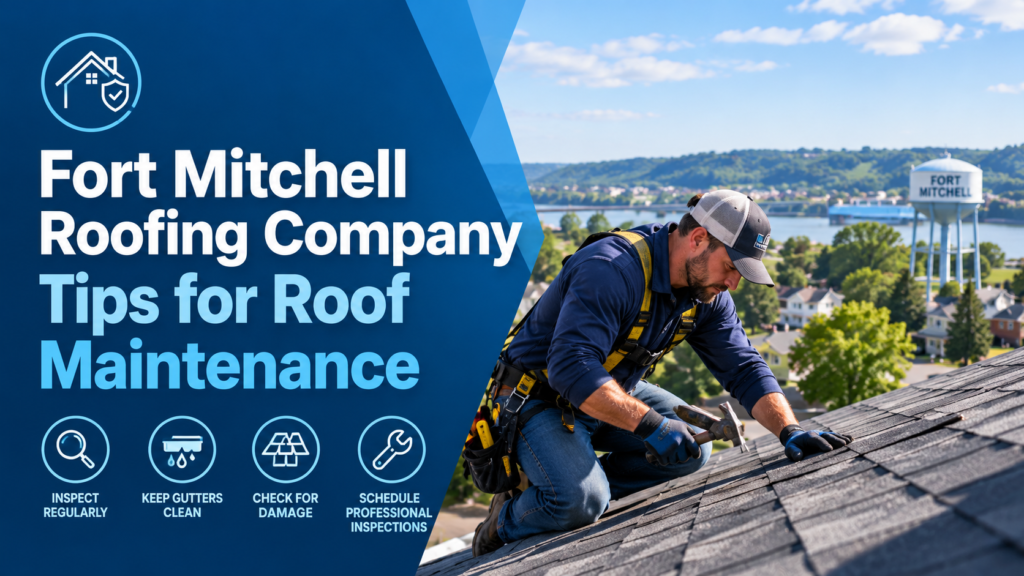
Your roof is one of the most important parts of your home. It protects your family from rain, wind, changing temperatures, and other outdoor elements. However, even a well-installed roof requires regular maintenance to remain in good condition. Without proper care, minor issues such as loose shingles, clogged gutters, and damaged flashing can develop into costly repairs.
For homeowners in Fort Mitchell, Kentucky, seasonal weather changes make roof maintenance especially important. Heavy rain, strong winds, snow, and freezing temperatures can gradually affect roofing materials. Following a consistent maintenance routine helps extend your roof’s lifespan and reduces the risk of unexpected damage.
Working with a reliable roofing professional can also help you identify potential problems before they become serious. Here are practical roof maintenance tips that homeowners can follow to protect their properties and maintain a dependable roofing system.
1. Schedule Regular Roof Inspections
Check Your Roof at Least Twice a Year
One of the easiest ways to protect your roof is to schedule inspections in the spring and fall. These seasonal checks help identify damage caused by winter conditions, summer storms, and normal wear and tear.
Look for missing, cracked, curling, or damaged shingles. These issues can allow moisture to enter the roofing system and damage the underlying structure. Also, pay attention to sagging areas, damaged roof edges, and visible signs of deterioration.
Homeowners should avoid climbing onto the roof themselves, especially when surfaces are wet or steep. A professional roofer has the equipment and experience needed to inspect difficult areas safely.
Inspect After Severe Weather
Strong winds, hail, and heavy storms can damage roofing materials without creating obvious leaks immediately. After severe weather, check your property from the ground for missing shingles, fallen branches, damaged gutters, and other visible problems.
Contact a roofing professional if you suspect storm damage. Prompt inspections can help prevent small problems from becoming expensive repairs.
2. Keep Gutters and Downspouts Clean
Prevent Water From Accumulating
Gutters play an essential role in directing rainwater away from your roof and foundation. When leaves, twigs, and debris block the drainage system, water can overflow and collect near the roofline.
Standing water may contribute to fascia damage, wood rot, roof leaks, and foundation problems. Clean your gutters regularly, particularly during autumn when falling leaves can quickly create blockages.
Check that downspouts direct water away from your home’s foundation. Make sure gutters are securely attached and do not sag under the weight of accumulated debris.
Watch for Ice Dams During Winter
Kentucky winters can bring freezing temperatures that contribute to ice dams along roof edges. These formations can prevent melting snow from draining properly, allowing water to back up beneath roofing materials.
Proper attic insulation, ventilation, and drainage can help reduce the conditions that contribute to ice dams. If you notice repeated ice buildup, ask a roofing professional to assess your roof and attic.
3. Remove Debris and Maintain Nearby Trees
Keep Branches Away From the Roof
Overhanging tree branches can scrape shingles, drop leaves into gutters, and break during storms. Regular tree maintenance reduces these risks and helps protect your roofing system from unnecessary damage.
Trim branches that extend too close to the roof, but hire a qualified tree care professional when large limbs or difficult cutting situations are involved.
Prevent Moisture From Trapped Debris
Leaves, pine needles, and branches can collect in roof valleys and other areas where water naturally flows. When debris remains in place, it can trap moisture and interfere with proper drainage.
Have a professional remove accumulated debris when necessary. Avoid pressure washing shingles or using harsh cleaning methods that may damage protective granules.
4. Check Your Attic Ventilation and Insulation
Maintain Consistent Airflow
Your roof’s condition depends partly on what happens underneath it. Poor attic ventilation can allow heat and moisture to accumulate, potentially contributing to mold growth, premature shingle deterioration, and higher energy costs.
Check for blocked vents and signs of condensation. Proper ventilation helps regulate attic temperatures and allows moisture to escape.
Look for Signs of Roof Leaks
Inspect your attic periodically for water stains, damp insulation, mold-like growth, or musty odors. These warning signs may indicate a roof leak or ventilation problem.
Address the underlying cause instead of simply covering visible stains. A roofing professional can determine whether the problem involves damaged shingles, flashing, roof penetrations, or another source of moisture.
5. Pay Attention to Flashing and Roof Seals
Protect Vulnerable Roof Areas
Flashing is installed around chimneys, skylights, vents, and other roof openings to prevent water from entering the home. Because these areas interrupt the roof’s surface, they require careful inspection.
Look for loose metal, damaged sealant, rust, or gaps around roof penetrations. If flashing becomes compromised, rainwater may seep into the structure even when the surrounding shingles appear intact.
A qualified roofing contractor can repair or replace damaged flashing using appropriate materials and installation methods.
6. Address Small Roofing Problems Early
Avoid Delaying Necessary Repairs
A missing shingle or minor leak may appear harmless, but water can travel beneath roofing materials and damage insulation, ceilings, framing, and interior finishes.
Maintenance tips help homeowners protect their investment. A trusted Fort Mitchell Roofing Company can help identify developing roofing issues, recommend appropriate repairs, and maintain your roof before minor damage becomes a major expense.
When choosing a contractor, look for relevant experience, clear written estimates, appropriate insurance, and a strong reputation for quality work. Homeowners can also compare local providers, including Tip Top Roofing, to determine which company best fits their roofing needs.
Know When Repairs Are No Longer Enough
Frequent leaks, widespread shingle deterioration, and recurring repair costs may indicate that a roof is approaching the end of its useful life. A professional assessment can help you compare the costs of continued repairs with roof replacement.
An experienced Edgewood Kentucky Roofing Company may also help homeowners understand how roofing material choices, installation quality, and local weather conditions affect long-term performance.
7. Prepare Your Roof for Every Season
Follow a Seasonal Maintenance Routine
Different seasons create different roofing challenges. In spring, inspect for winter damage and clear gutters. During summer, check for storm damage and make sure attic ventilation is working properly.
In fall, remove leaves from gutters and arrange necessary tree trimming before winter weather arrives. During winter, watch for ice buildup and interior signs of leaks without climbing onto icy surfaces.
Keeping a record of inspections, repairs, and roofing expenses can help you recognize recurring problems and plan for future maintenance.
Frequently Asked Questions
1. How often should I have my roof inspected?
Most homeowners should arrange professional roof inspections at least once a year, with additional inspections after significant storms or when damage is suspected. Older roofs may benefit from more frequent monitoring.
2. What are the most common signs of roof damage?
Common warning signs include missing or curling shingles, water stains on ceilings, damaged flashing, clogged gutters, granule buildup in downspouts, and damp attic insulation. Some problems are difficult to see from the ground, making professional inspections valuable.
3. Can regular maintenance extend my roof’s lifespan?
Yes. Regular inspections, gutter cleaning, timely repairs, and proper attic ventilation can help reduce preventable damage and extend a roof’s useful life. However, maintenance cannot eliminate normal aging or guarantee a specific lifespan.
4. When is the best time to schedule roof maintenance in Fort Mitchell?
Spring and fall are generally practical times for routine inspections. Spring checks can reveal winter damage, while fall maintenance helps prepare your roof for colder weather. Inspections should also be scheduled after severe storms when damage is suspected.
5. Should I repair or replace my roof?
The right choice depends on your roof’s age, the extent of damage, the condition of its underlying structure, and the cost of repairs. A professional inspection can help determine whether targeted repairs are sufficient or replacement offers better long-term value.
Conclusion
Regular roof maintenance is essential for protecting your Fort Mitchell home from weather-related damage and unexpected repair expenses. By scheduling inspections, cleaning gutters, maintaining nearby trees, checking attic ventilation, and repairing damaged shingles or flashing promptly, homeowners can keep their roofing systems in better condition.
Working with an experienced roofing contractor provides additional peace of mind by helping identify problems that may not be visible from the ground. Whether you need routine maintenance, storm damage repairs, or advice about roof replacement, taking action early can help protect your property for years to come.