

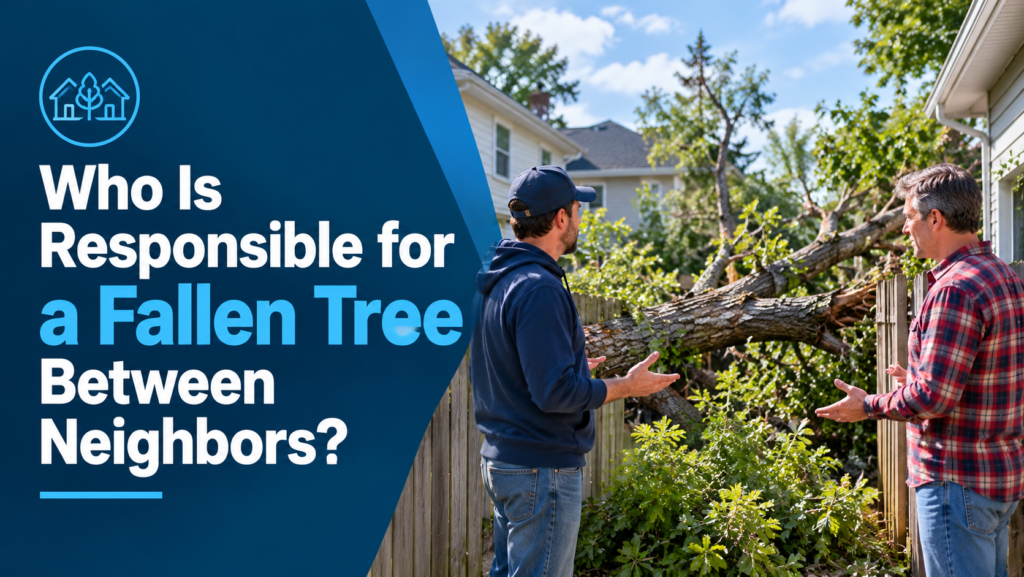
When a tree falls between neighboring properties, it can quickly become a stressful situation. A fallen tree may damage a fence, crush a vehicle, block a driveway, or land on a neighbor’s roof. Besides dealing with the physical damage, homeowners often face an important question: who is responsible for paying for cleanup and repairs?
The answer depends on several factors, including where the tree originated, what caused it to fall, whether either property owner knew the tree was dangerous, and the insurance coverage available. Understanding these details can help homeowners in Alpharetta and surrounding Georgia communities resolve disputes and protect their property.
Who Is Responsible When a Tree Falls Between Neighbors?
When a Healthy Tree Falls During a Storm
In many situations, when a healthy tree falls because of strong winds, lightning, or another unexpected natural event, the property owner whose land was damaged may need to rely on their own homeowners insurance.
For example, if a healthy tree from your neighbor’s yard falls onto your house during a severe storm, your homeowners insurance may cover eligible damage to your home, subject to your policy terms and deductible.
However, insurance coverage varies. Some policies may also provide limited coverage for removing a tree that damages an insured structure or blocks certain access points. A tree that falls without damaging covered property may not qualify for the same benefits.
The fact that the tree originated on your neighbor’s property does not automatically make your neighbor financially responsible.
When a Neglected Tree Causes Damage
The situation may be different if the tree was visibly dead, diseased, severely leaning, or otherwise dangerous before it fell.
If a neighbor knew, or reasonably should have known, that a tree presented a foreseeable danger and failed to address it, they may face liability under applicable negligence principles.
Evidence may include previous written complaints, arborist reports, photographs showing visible decay, or records of requests to remove a hazardous tree.
Liability is not automatic simply because a tree was unhealthy. The circumstances, applicable Georgia law, and evidence of negligence all matter when determining responsibility.
What Does Georgia Law Say About Fallen Trees?
Understanding Property Owner Responsibilities
In Georgia, responsibility for damage caused by a fallen tree generally depends on the circumstances surrounding the incident. Courts may consider whether the tree owner knew or should have known that the tree posed a danger and whether reasonable precautions were taken.
A tree owner is not necessarily liable for every tree that falls from their property. Natural events can cause even healthy trees to fail unexpectedly.
However, property owners should take reasonable steps to address obvious hazards. If a tree has substantial dead branches, visible trunk damage, significant root problems, or a dangerous lean, arranging a professional inspection may help prevent future damage.
When liability is disputed, homeowners may benefit from consulting a Georgia property attorney or their insurance company for guidance specific to the incident.
What If the Tree Was Already Damaged?
Previous storm damage can complicate a fallen-tree dispute. A tree weakened by an earlier storm may become more dangerous over time, particularly if it develops cracks, loses major branches, or begins leaning toward a neighboring structure.
If a property owner receives credible warnings about a hazardous tree and ignores them, those facts may become relevant when determining negligence.
Keep records of communications, inspection reports, and photographs. Documentation can help clarify whether the hazard was apparent before the tree fell.
What Should You Do When a Neighbor’s Tree Falls?
Step 1: Check for Immediate Safety Risks
Stay away from the fallen tree if it is touching power lines, resting on a building, or creating an unstable situation. Never attempt to move a tree that may be under tension or entangled with electrical equipment.
Contact emergency services when there is an immediate threat to life or public safety. Report downed electrical lines to the utility company and keep people away from the area.
Step 2: Document the Damage
Take photographs and videos of the tree, its apparent point of origin, damaged structures, and surrounding conditions, provided it is safe to do so.
Record the date, weather conditions, and any relevant details about the incident. If the tree appeared unhealthy before it fell, preserve any existing photographs, messages, or inspection reports that demonstrate its condition.
Avoid removing evidence before your insurer has had an opportunity to inspect the scene, unless removal is necessary to address an immediate safety risk.
Step 3: Contact Your Insurance Company
Notify your homeowners insurance provider promptly. Ask whether your policy covers structural repairs, debris removal, temporary accommodations, and other expenses related to the incident.
Your insurer can explain your coverage and deductible and may investigate whether another party could be responsible. Keep receipts for reasonable emergency expenses and any temporary protective measures.
Step 4: Communicate With Your Neighbor
Approach the situation calmly and share the available information. Even if you believe your neighbor may be responsible, avoid making accusations before the facts are clear.
Discuss immediate safety concerns, access for cleanup, and any available insurance information. If the disagreement continues, consider mediation or professional legal advice.
How Can Neighbors Prevent Fallen-Tree Disputes?
Schedule Regular Tree Inspections
Routine inspections can help identify dead branches, decay, root damage, fungal growth, and other potential warning signs.
A qualified arborist can assess a tree’s condition and recommend appropriate pruning, monitoring, or removal. Professional evaluations are particularly useful for large trees near homes, fences, garages, and property boundaries.
Address Hazardous Trees Promptly
If a tree on your property appears dangerous, obtain a professional assessment rather than waiting for a storm to expose the problem.
Homeowners seeking tree care Milton GA services can arrange inspections and discuss practical options for managing potentially hazardous trees. Depending on the tree’s condition, proper pruning or removal may reduce risks to nearby properties.
For trees that require removal, professional Milton tree removal services can help manage the work safely and minimize the chance of additional property damage.
Maintain Clear Communication
If a tree appears to threaten neighboring property, raise the concern respectfully and keep written records of important conversations.
Property owners should also understand local ordinances, tree protection requirements, and any applicable restrictions before pruning or removing trees near property lines. In some cases, permission or a permit may be required.
Frequently Asked Questions
1. If my neighbor’s tree falls on my house, do they have to pay?
Not necessarily. If the tree was healthy and fell because of an unexpected storm, your homeowners insurance may cover eligible damage. If your neighbor negligently ignored a known hazard, they may be liable depending on the evidence and applicable law.
2. Who pays to remove a fallen tree between two properties?
Responsibility depends on the circumstances, local law, and insurance coverage. If the tree damages an insured structure, a homeowners policy may cover some removal costs. If the tree falls without damaging covered property, removal expenses may be handled differently.
3. Can I force my neighbor to remove a dangerous tree?
You may be able to pursue legal remedies when a tree presents a genuine hazard, but the options depend on local law and the specific facts. Start by documenting the concern, requesting a professional inspection, and checking local regulations. Seek legal advice if the neighbor refuses to address a serious risk.
4. What happens if a tree falls across the property line?
The location of the trunk, branches, and damage may affect cleanup arrangements, but the tree’s original location and the circumstances of its failure are also important. Do not assume that the neighbor whose land contains the trunk is automatically responsible for every expense.
5. Does homeowners insurance cover tree removal?
It may cover removal when a fallen tree damages an insured structure or meets another covered condition under the policy. Coverage limits, exclusions, deductibles, and specific policy language determine the benefits available.
Conclusion
Determining who is responsible for a fallen tree between neighbors requires looking beyond property boundaries. The tree’s condition before it fell, the cause of the incident, evidence of negligence, and the terms of applicable insurance policies can all affect the outcome.
Understanding liability helps Alpharetta property owners handle fallen trees correctly. By documenting damage, notifying insurers, communicating respectfully, and obtaining professional advice when needed, homeowners can resolve disputes more effectively.
Preventive tree inspections and timely maintenance can also reduce the risk of damage and costly disagreements. Whether you need an arborist’s assessment or professional tree removal, taking action before a hazardous tree fails can help protect your home and maintain good relationships with your neighbors.