

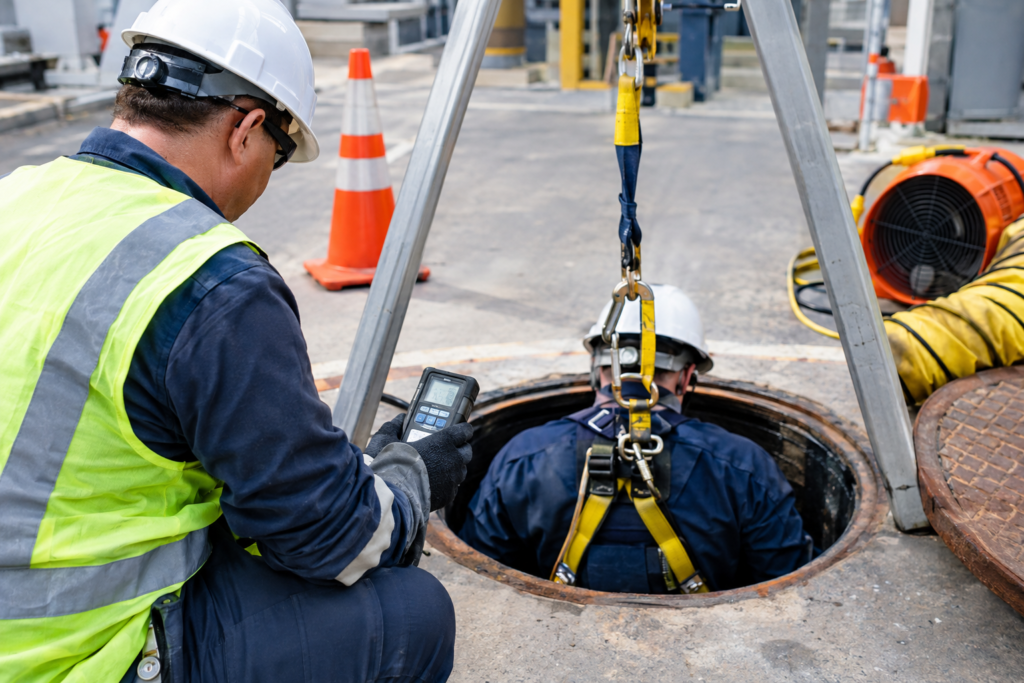
What Is a Confined Space?
OSHA generally describes a confined space as an area that is large enough for an employee to enter and perform assigned work, has limited or restricted means of entry or exit, and is not designed for continuous employee occupancy. Examples include tanks, pits, silos, manholes, storage bins, and underground utility vaults.
Not every confined space is automatically classified as a permit-required confined space. The employer must evaluate the characteristics and hazards associated with the space to determine the appropriate classification.
This distinction is important because the controls required for entering a hazardous space can be significantly more extensive than those needed for a space without identified serious hazards.
What Makes a Confined Space Permit-Required?
A permit-required confined space may contain or have the potential to contain a hazardous atmosphere, material capable of engulfing an entrant, an internal configuration that could trap or asphyxiate a worker, or another recognized serious safety or health hazard.
Potential hazards can include:
- Oxygen deficiency or oxygen enrichment
- Flammable gases or vapors
- Toxic gases and airborne contaminants
- Engulfment by liquids, powders, grains, or other materials
- Moving mechanical equipment
- Electrical hazards
- Extreme temperatures
- Unexpected flow of liquids or gases
- Structural hazards
- Difficult or restricted emergency access
An employer should never assume that a space is safe simply because workers have entered it before without an incident. Conditions can change because of maintenance activities, weather, chemical processes, equipment operation, nearby work, or changes to ventilation.
Identify Confined Spaces Before Work Begins
One of the most important steps in a safety program is identifying confined spaces before employees are exposed to them.
For construction activities, OSHA requires employers to ensure that a competent person identifies confined spaces where employees may work and determines which spaces are permit spaces through evaluation and testing as necessary.
In general industry, employers are also responsible for evaluating their workplaces to determine whether permit-required confined spaces exist.
Employers should maintain an inventory or site map of known confined spaces where appropriate. Each identified space should be evaluated for its physical characteristics, potential atmospheric hazards, sources of energy, materials that could engulf a worker, and other hazards.
Clear warning signs can also help prevent unauthorized entry. OSHA’s construction requirements specifically address informing exposed employees about the existence, location, and dangers of permit spaces.
Conduct a Thorough Hazard Assessment
Before employees enter a confined space, employers should understand what hazards are present and what could change during the work.
A hazard assessment should consider the work being performed, the history of the space, connected piping or equipment, chemicals, ventilation, electrical sources, mechanical equipment, and nearby activities.
For example, a tank may appear safe when empty, but residue can release hazardous vapors. A sewer may contain toxic gases or experience sudden changes in water levels. A utility vault may contain an oxygen-deficient atmosphere. A storage bin may present an engulfment hazard.
The assessment should also consider hazards introduced by the work itself. Welding, cutting, painting, cleaning chemicals, and other activities can change atmospheric conditions inside a confined space.
Test the Atmosphere
Atmospheric hazards are among the most serious risks associated with confined space entry. Workers cannot reliably identify oxygen deficiency, toxic gases, or flammable atmospheres using their senses alone.
OSHA’s permit-space requirements address atmospheric testing before entry, including testing for oxygen, flammable gases and vapors, and potential toxic air contaminants.
Employers should use properly maintained and calibrated monitoring equipment and ensure employees understand how to operate it. Depending on the hazards and applicable standard, atmospheric conditions may need to be monitored periodically or continuously.
Construction requirements place particular emphasis on continuous atmospheric monitoring whenever possible.
Monitoring should not be treated as a one-time formality. Conditions can change after an employee enters the space, especially when work activities, ventilation, weather, or connected systems change.
Control Hazards Before Entry
The safest confined space entry is one in which hazards are eliminated or isolated before employees enter whenever feasible.
Employers may need to use procedures such as:
- Lockout/tagout of hazardous energy sources
- Blanking or blinding piping
- Disconnecting equipment
- Blocking mechanical components
- Isolating flowable materials
- Ventilating the space
- Removing hazardous substances
- Installing barriers
- Controlling ignition sources
- Establishing communication systems
OSHA’s requirements recognize isolation as an important method for protecting entrants from physical hazards. For permit spaces, employers may need to isolate hazards before entry depending on the conditions and applicable standard.
Establish a Permit System When Required
When employees enter permit-required spaces, employers need an appropriate written program and entry procedures. OSHA’s construction standard includes requirements addressing permit-space programs, permitting processes, entry permits, training, employee duties, and rescue and emergency services.
An entry permit can document important information such as:
- The location of the space
- The purpose of the entry
- Authorized entrants
- The entry supervisor
- Atmospheric testing results
- Identified hazards
- Required protective equipment
- Isolation procedures
- Ventilation requirements
- Communication methods
- Rescue arrangements
- Entry and exit times
Documentation helps ensure that everyone involved understands the conditions under which entry is authorized.
Train Employees for Their Specific Roles
Confined space safety depends heavily on employee training. Workers need to understand not only the hazards but also their specific responsibilities during an entry operation.
Depending on the entry program, personnel may serve as authorized entrants, attendants, entry supervisors, or rescue personnel. Each role has different responsibilities.
Training should cover subjects such as hazard recognition, atmospheric monitoring, communication procedures, personal protective equipment, emergency procedures, evacuation requirements, and the conditions that require an entry to be stopped.
OSHA also requires appropriate training for employees involved in permit-space operations, and construction employers must ensure workers receive training in a language and vocabulary they understand.
Training should be reinforced whenever procedures change, new hazards are identified, employees demonstrate inadequate knowledge, or other circumstances indicate that additional instruction is necessary.
Assign a Dedicated Attendant
An attendant can play a critical role in confined space safety. The attendant remains outside the space and monitors authorized entrants while maintaining communication and awareness of changing conditions.
The attendant should know how to recognize signs of danger and understand when entrants need to evacuate. The attendant should also know how to summon rescue services and should not enter the space to perform an unplanned rescue unless properly trained, equipped, and authorized under the employer’s rescue procedures.
A properly trained attendant can provide an important layer of protection because an entrant inside the space may not be able to recognize developing hazards as quickly as someone monitoring the operation from outside.
Prepare a Rescue Plan Before Entry
Emergency planning should occur before anyone enters a hazardous confined space. Waiting until an emergency happens to determine how a worker will be rescued can create additional danger.
Employers should identify the appropriate rescue service, confirm that the service can respond, and ensure that the rescue plan is suitable for the specific space and hazards. OSHA’s requirements address rescue and emergency services for permit-required confined spaces.
Rescue planning should consider:
- Access to the space
- Retrieval equipment
- Harnesses and lifelines where appropriate
- Communication systems
- Rescue team capabilities
- Emergency contact procedures
- Atmospheric hazards
- Required personal protective equipment
- Medical response
- Non-entry rescue options
Employers should also recognize that calling emergency services is not necessarily a complete rescue plan. The organization should understand the capabilities and response arrangements of the selected rescue service before entry operations begin.
Coordinate With Contractors and Other Employers
Confined space work often involves multiple employers. A facility owner, general contractor, subcontractor, maintenance company, and specialized service provider may all have responsibilities at the same worksite.
Communication between these parties is essential. OSHA’s construction requirements include provisions for communication and coordination among host employers, controlling contractors, and entry employers.
Before work begins, employers should discuss known confined spaces, hazards, control measures, entry procedures, and emergency arrangements. They should also communicate changes that could affect workers.
For example, a contractor operating equipment near a confined space could unintentionally introduce fumes into the space. Without coordination, one employer’s activity could create a hazard for another employer’s workers.
Use Appropriate Personal Protective Equipment
Personal protective equipment is an important component of a confined space program, but it should not replace hazard elimination or engineering controls.
Depending on the work and hazards, employees may need respiratory protection, protective clothing, gloves, eye protection, head protection, fall protection, hearing protection, retrieval equipment, or other specialized equipment.
The equipment selected should correspond to the actual hazards identified during the assessment. Employees also need training on the correct use, inspection, limitations, maintenance, and storage of required equipment.
When Should Employees Stop Work?
Employees should understand that they have the authority and responsibility to leave a confined space when conditions become unsafe or when required controls are no longer effective.
Entry operations may need to stop when:
- Atmospheric conditions become hazardous
- Required ventilation fails
- Communication is lost
- An alarm activates
- Unexpected materials enter the space
- Isolation measures fail
- Weather creates a new hazard
- An employee experiences symptoms
- Required rescue resources become unavailable
- Conditions differ significantly from the entry permit
A permit should never be viewed as permission to continue working regardless of changing conditions. Safety conditions must be continuously evaluated throughout the operation.
Building a Strong Confined Space Safety Program
A comprehensive confined space safety program combines hazard identification, engineering controls, administrative procedures, training, monitoring, equipment, communication, and emergency planning.
Employers should periodically review their procedures to determine whether they remain effective. Incidents, near misses, equipment changes, new processes, and changes to workplace layouts can all indicate that a confined space assessment needs to be updated.
Confined space safety should also be integrated into broader workplace safety efforts rather than treated as an isolated compliance exercise.
For organizations that need help developing or reviewing their safety procedures, professional environmental health and safety support can help identify gaps and establish practical processes suited to the workplace.
Confined space work requires the right permits training and monitoring. Employers that take a systematic approach to identifying hazards, controlling risks, training workers, monitoring conditions, and preparing for emergencies can create a safer environment for employees who must perform work in these challenging spaces.
FAQs About Confined Space Safety
What is considered a confined space?
A confined space generally has limited or restricted entry or exit, is large enough for an employee to enter and perform assigned work, and is not designed for continuous occupancy. Common examples include tanks, pits, silos, manholes, vaults, and storage bins.
Is every confined space a permit-required confined space?
No. A confined space becomes a permit-required confined space when it meets the applicable regulatory criteria, such as having a hazardous atmosphere, engulfment hazard, dangerous configuration, or another recognized serious safety or health hazard.
Does confined space work require atmospheric testing?
Atmospheric testing is required in circumstances covered by applicable confined space standards, particularly when hazardous atmospheres may be present. OSHA’s permit-space requirements address testing for oxygen, flammable gases and vapors, and potential toxic air contaminants.
Who should receive confined space training?
Employees whose work involves entering, attending, supervising, or performing rescue for permit-required confined spaces may require specific training based on their assigned duties. Employers must ensure workers receive training appropriate to the hazards and procedures involved.
Does a confined space need a rescue plan?
For permit-required confined space entry, employers need appropriate rescue and emergency arrangements. The rescue plan should account for the specific space, hazards, equipment, access limitations, and capabilities of the selected rescue service.
Can contractors perform confined space work?
Yes, but employers must address their respective responsibilities and coordinate activities when multiple employers are involved. This is especially important on construction sites where different contractors may introduce hazards that affect confined space operations.
Why is confined space monitoring important?
Conditions inside a confined space can change during work. Atmospheric monitoring can help identify dangerous changes that may not be visible or detectable by workers. Monitoring requirements depend on the applicable standard and hazards, and construction rules emphasize continuous monitoring whenever possible.