

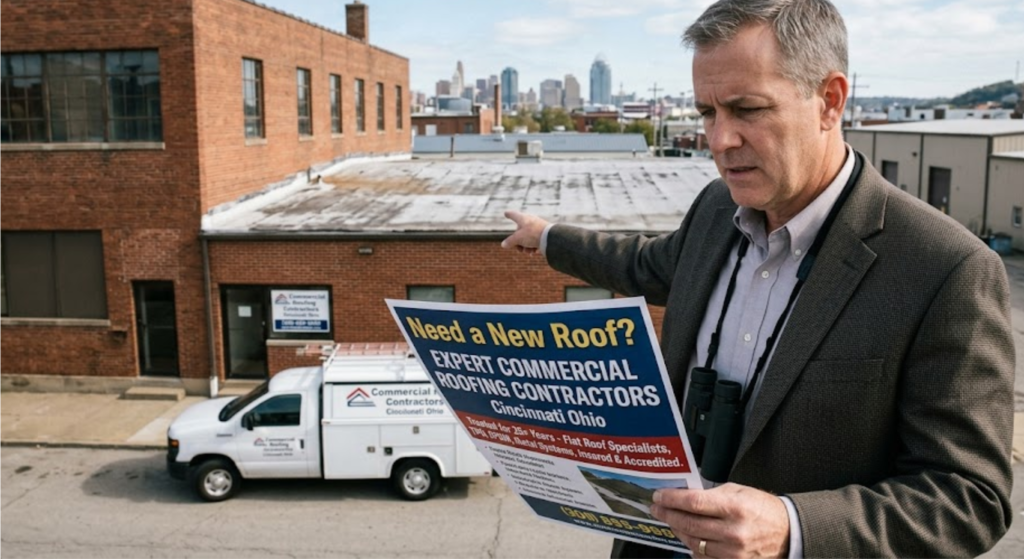
For facility managers, building owners, and property directors across the Greater Cincinnati area and Northern Kentucky, the physical integrity of a commercial facility is paramount to business continuity. Among all structural components, the roof shoulders the heaviest day-to-day burden. It acts as the primary barrier protecting expensive interior assets, inventory, heavy machinery, and employees from the volatile, four-season Midwestern weather.
However, because commercial roof systems are flat or low-slope, structural compromises are not always easily visible from ground level. Ignoring subtle signs of deterioration can lead to operational downtime, structural code violations, and astronomical emergency repair bills. When structural issues arise, partnering with an elite regional specialist is critical. A qualified team of commercial roofing contractors cincinnati ohio understands the code requirements, load limits, and architectural demands of commercial roofing in Ohio and Kentucky.
Recognizing the key indicators that your facility requires professional commercial roofing intervention can protect your bottom line, ensure code compliance, and significantly extend the lifespan of your property investment.
1. Active Interior Water Infiltration and Wall Staining
The most definitive and urgent indicator that your property requires immediate commercial assessment is internal water leaking. While a residential leak might cause a localized ceiling stain, a leak in a commercial building can travel hundreds of feet horizontally across concrete decks or steel trusses before manifesting inside.
Key warning signs within your interior workspace include:
- Discolored Ceiling Tiles: Water pooling above suspended ceiling networks creates unsightly brown or yellow water rings.
- Blistering Wall Paint: Moisture trapped inside drywall or concrete masonry blocks will cause paint or industrial coatings to bubble and peel away.
- Persistent Structural Odors: Recurring musty odors or visible mold development along roof lines indicate long-term water intrusion within the insulation layers.
If you observe any of these internal symptoms, delaying an inspection will only allow water to destroy the underlying roof insulation, creating hidden safety hazards and drastically escalating eventual repair costs.
2. Advanced Membrane Degradation: Blistering, Ridging, and Splitting
Modern commercial flat roofs rely heavily on specialized single-ply membranes such as Thermoplastic Polyolefin (TPO), Polyvinyl Chloride (PVC), or Ethylene Propylene Diene Monomer (EPDM) rubber. Over years of enduring heavy UV radiation and dramatic temperature swings, these materials will exhibit specific physical signs of stress.
When walking the roof during a routine maintenance evaluation, property managers should look for structural defects like blistering (pockets of air or trapped moisture expanding under the membrane surface) and ridging (wrinkled lines that form when insulation boards shift underneath). Additionally, keep an eye out for open seams or mechanical splits. Because single-ply systems rely entirely on a continuous, hot-air welded or chemically adhered seal, even a minor three-inch split along a seam can allow thousands of gallons of stormwater to penetrate the building core during a standard Ohio downpour.
[ Membrane Wear Checklist ]
      |
      +---> Blistering & Bubbling (Trapped moisture/air expansion)
      |
      +---> Ridging & Tent-ing (Underlying insulation board movement)
      |
      +---> Seam Failure & Splitting (Degradation of welds or adhesives)
      |
      +---> Surface Chalking (Severe UV radiation erosion over time)
3. Chronic Ponding Water on the Roof Deck
By industry standard, a properly engineered low-slope or flat roofing system must drain water completely within 48 hours of a rain event. If standing water remains on your facility’s roof long after the storm has passed, you are dealing with ponding water.
Ponding water presents a severe structural threat to commercial buildings. Standing pools accumulate massive dead-load weight, putting undue stress on structural steel joists and concrete decking. Furthermore, standing water acts as a magnifying glass for solar radiation, cooking the underlying membrane, accelerating adhesive degradation, and attracting biological growth that eats away at the roof system. Professional commercial roofers resolve this by implementing custom tapered insulation systems or installing new scuppers and drains to restore perfect, code-compliant water shedding.
4. Spiking Energy Bills and Thermal Short-Circuiting
A commercial roof serves a critical role in your building’s thermal envelope. Modern installations utilize thick layers of polyisocyanurate (ISO) insulation boards to keep your interior temperature regulated, keeping heating costs low in the winter and cooling costs manageable during humid Cincinnati summers.
If you notice a sudden, unexplained spike in your monthly utility costs, it often points to a compromised roof infrastructure. When a flat roof suffers from hidden leaks, the water saturates the underlying insulation boards. Wet insulation loses its R-value (thermal resistance) entirely, causing severe thermal short-circuiting. An experienced commercial roofing crew can deploy advanced infrared thermal imaging cameras to track heat signatures across your roof surface, instantly locating cold, wet insulation pockets that need immediate extraction and replacement.
Technical Comparison: Why Commercial Work Requires Local Specialists
| Operational Demand | Standard Residential Parameters | Cincinnati Commercial Code Standards |
|---|---|---|
| Material Application | Nailed asphalt shingles & steep-slope layout. | Heat-welded single-ply (TPO/PVC) & heavy metal work. |
| Structural Engineering | Basic wood framing and lightweight load limits. | Complex structural steel, concrete decks, and strict live/dead load capacities. |
| Zoning & Permitting | Basic municipal residential zoning guidelines. | Extensive commercial occupancy codes across multiple counties (Hamilton, Boone, Kenton). |
| Drainage Logistics | Standard perimeter gutters and downspouts. | Internal roof drains, heavy-duty scuppers, and precise tapered slope calculations. |
Conclusion
Your commercial facility is a highly valuable, income-generating asset that requires proactive infrastructure management to remain safe, efficient, and fully operational. Attempting to overlook or temporarily patch structural roof deficiencies is a high-risk gamble that frequently leads to premature structural failure, asset damage, and major financial losses. By learning the key indicators of roof wear from internal water stains to membrane splits and chronic ponding, you can take action before minor issues become major emergencies. Partnering with a vetted, hyper-local commercial team ensures your building stays strictly code-compliant and fully protected, letting you focus on running your business with absolute peace of mind.
Frequently Asked Questions (FAQ)
Q: What is the average lifespan of a commercial TPO or EPDM flat roof system?
A: When properly installed and maintained by certified contractors, a high-quality single-ply TPO or EPDM membrane system typically lasts between 20 to 30 years. Regular semi-annual preventive inspections are essential to reaching this maximum lifespan.
Q: Can a commercial roofing project be performed without shutting down our business?
A: Yes. Experienced commercial roofing contractors specialize in low-impact project execution. They coordinate specific staging zones, safely manage heavy crane operations, and can adjust scheduling to execute noisy tasks outside your normal operating hours, avoiding any operational downtime.
Q: What is a core cut, and why do commercial roofing contractors perform them?
A: A core cut is a physical structural sample taken by cutting a small cylinder through all layers of the existing roof down to the deck. This allows technicians to inspect the exact thickness, composition, and moisture levels of the underlying insulation layers, determining if the roof can be repaired or if it requires a full tear-off.