

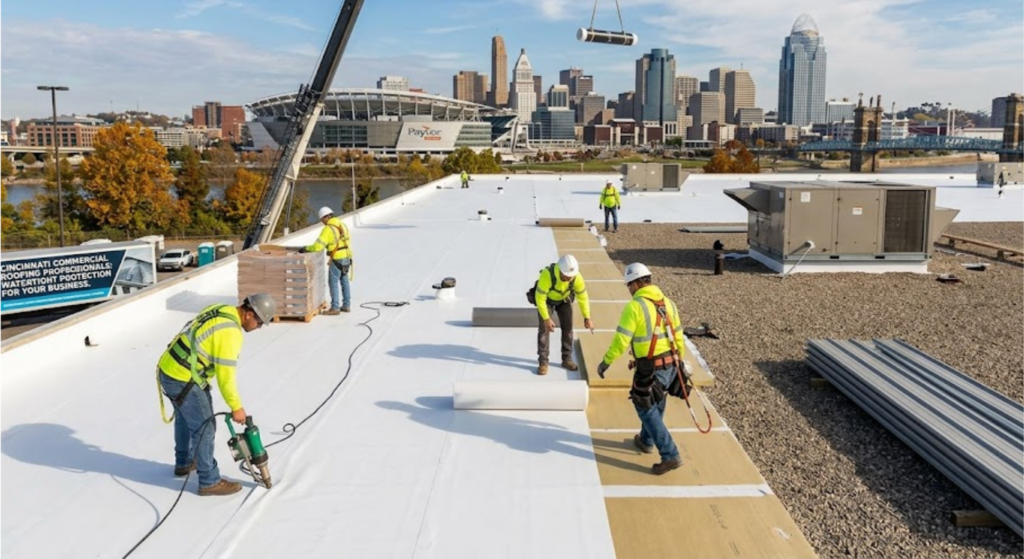
Managing a commercial or industrial facility in the Ohio Valley requires a proactive approach to building maintenance. With a climate that rapidly shifts from blistering summer heat and severe thunderstorms to freezing winter temperatures and heavy ice loads, your building’s exterior envelope is constantly under immense environmental stress. At the very top of that defensive perimeter is your commercial roof. A compromised roof does not merely lead to a few internal drips; it threatens your structural integrity, damages vital inventory, and can force a complete halt to your daily business operations.
To navigate these high-stakes infrastructural challenges, relying on a reactive strategy is no longer viable. Facility managers choose Cincinnati commercial roofing for detailed inspections, fast response times, and tailored service contracts. By understanding the specific roofing systems best suited for the region, the modern maintenance technologies available, and the value of a dedicated local partnership, you can drastically extend the lifespan of your roof. Here is everything you need to know about protecting your commercial investment in the Greater Cincinnati area.
1. The Cincinnati Climate and Its Impact on Your Roof
The Northeast and Midwest regions are accustomed to drastic swings in weather, meaning commercial roofs must be engineered to withstand extreme temperature fluctuations and precipitation. In Cincinnati, the primary threat to flat and low-slope roofs is the continuous freeze-thaw cycle. During the winter, water from melting snow seeps into microscopic cracks in the roofing membrane or flashing. When temperatures drop overnight, that water freezes and expands, tearing the roofing materials apart.
During the summer, the intense UV radiation slowly degrades the protective chemical compounds in asphalt and rubber membranes, causing them to shrink, crack, and pull away from the parapet walls. Because of these distinct seasonal extremes, commercial property owners are increasingly prioritizing enhanced durability in their roofing choices, utilizing materials rated specifically for wind uplift, extreme cold, and heavy rain.
2. Choosing the Right Commercial Roofing System
Not all commercial roofs are created equal. The optimal system for your building depends on your specific industry, the amount of foot traffic the roof receives, and your long-term energy goals. Local contractors specialize in several advanced roofing systems:
- TPO (Thermoplastic Polyolefin): A highly popular, single-ply membrane known for its bright white, reflective surface. TPO is incredibly energy-efficient, actively reflecting the sun’s heat to lower internal air conditioning costs during the humid Ohio summers.
- EPDM (Ethylene Propylene Diene Terpolymer): Often referred to as a “rubber roof,” EPDM is a dark, incredibly durable synthetic membrane. It is highly resistant to hail and extreme cold, making it a rugged and dependable choice for industrial warehouses.
- PVC (Polyvinyl Chloride): PVC is highly resistant to chemical exposure, animal fats, and grease. This makes it the premier choice for restaurants, food processing facilities, and manufacturing plants where standard roofs might rapidly degrade.
- Metal Roofing: Known for its longevity and wind resistance, commercial metal roofing is a high-performance option that offers exceptional fire resistance and structural strength.
3. The Shift Toward Proactive Maintenance in 2026
Historically, many building owners operated under a “run-to-failure” model, only calling a roofer when water was actively pouring onto the warehouse floor. However, a major trend in 2026 is the rising importance of preventive maintenance programs. Rather than waiting for a catastrophic failure, property managers are investing in routine, scheduled inspections at least twice a year.
This proactive approach often utilizes technology-enabled strategies, such as moisture sensors and drones equipped with thermal imaging, which allow roofers to assess the condition of the roof without disruptive manual tear-offs. By detecting trapped moisture within the insulation early, these tactics help to minimize costly emergency repairs and operational disruptions.
4. Roof Restoration vs. Full Replacement
A full commercial roof tear-off and replacement is a massive capital expenditure. Fortunately, if structural degradation is caught early enough through proper maintenance, a full replacement may not be necessary.
Silicone or acrylic roof coatings and restoration options can dramatically reinforce existing flat roofs. These fluid-applied elastomeric coatings form a seamless, waterproof barrier over aging TPO, EPDM, or metal systems. This process extends the service life of the roof without the high costs and labor of a complete tear-off, saving property owners significant time and money while instantly improving the building’s UV reflectivity.
5. Why Partnering with a Local Expert is Essential
Commercial roofing is a highly specialized trade that requires precise engineering and a deep understanding of local building codes. When selecting a contractor, you must prioritize teams that offer comprehensive support. Leading local companies provide not only new installations but also comprehensive roof inspections, detailed preventive maintenance programs, and 24/7 emergency repair services to minimize business downtime.
By partnering with a trusted Cincinnati expert, you gain access to a team that understands the exact environmental stresses your building faces. They can accurately assess your current roof assembly, recommend strategic, cost-effective interventions, and ensure your facility remains watertight, energy-efficient, and structurally sound for decades to come.
Conclusion
Your commercial roof is a vital asset that requires strategic management and expert care. From selecting the appropriate single-ply membrane to combat the volatile Ohio Valley weather, to implementing a technology-driven preventive maintenance plan, the decisions you make today will define your facility’s operational security tomorrow. By moving away from reactive emergency repairs and embracing proactive asset management, you can stabilize your maintenance budgets and extend the life of your roofing system. Partner with a dedicated, local commercial roofing professional to ensure your building remains a safe, dry, and highly efficient environment for your employees and your business operations.
Frequently Asked Questions (FAQ)
Q: How often should a commercial flat roof in Cincinnati be inspected?
A: Industry best practices and modern preventive maintenance programs highly recommend scheduling professional inspections at least twice a year. Ideally, these should occur in the spring (to assess winter ice damage) and in the fall (to clear debris and prepare for the freezing weather).
Q: What is the primary difference between TPO and EPDM roofing?
A: The most notable difference is color and chemical makeup. TPO is typically white and highly reflective, making it excellent for summer cooling efficiency. EPDM is a dark, synthetic rubber membrane that is highly durable and absorbs heat, which can be
Q: Can a fluid-applied roof coating fix an actively leaking roof?
A: While silicone and acrylic roof coatings can reinforce an existing roof and extend its service life, they cannot be applied directly over wet, saturated insulation. A professional contractor must first locate the leak, replace any compromised underlying insulation, and repair the membrane before a restorative coating can be successfully applied.