

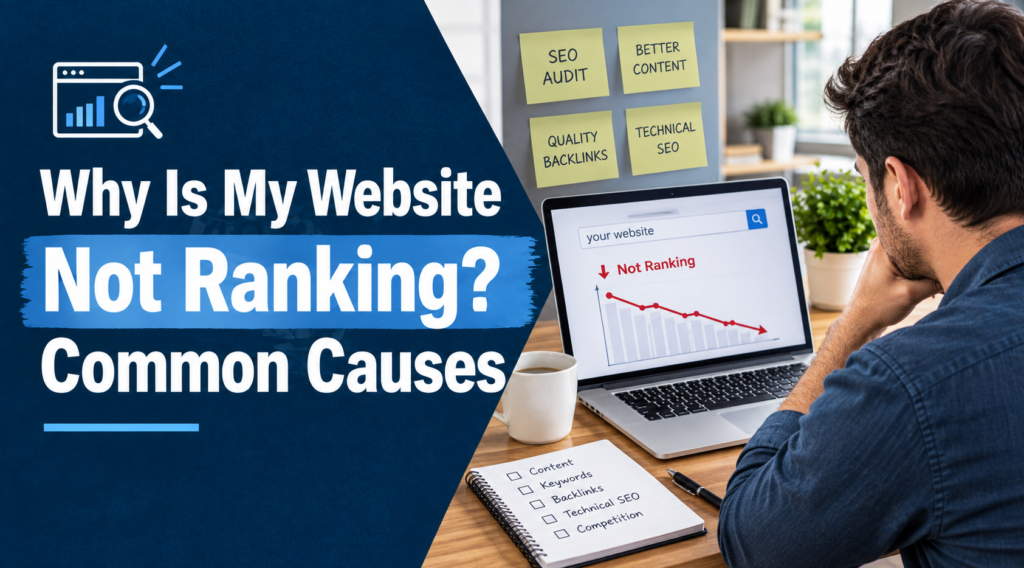
Having a website does not automatically guarantee that it will appear on the first page of Google. Many businesses invest in website design, publish content, and offer quality services but still struggle to attract organic traffic. If your website is not ranking, several factors could be preventing search engines from understanding, indexing, or recommending your pages to potential customers.
Understanding these issues is the first step toward improving your visibility online. Whether you operate a small business or manage a growing company, identifying common SEO problems can help you develop a more effective strategy. With the right approach, you can improve your website’s performance and reach more people searching for your products or services.
1. Your Website Has Technical SEO Problems
Technical SEO helps search engines crawl, understand, and index your website. If search engines cannot access important pages, those pages may not appear in search results, regardless of how useful their content might be.
Common technical SEO problems include broken links, incorrect redirects, duplicate pages, slow loading speeds, and crawl errors. Incorrect robots.txt settings or accidental noindex tags can also prevent important pages from appearing in Google.
Small technical issues can hold your site back. Understanding why is my website not ranking starts with checking whether search engines can access and index your pages properly. A technical SEO audit can uncover hidden problems and help you prioritize the fixes that will have the greatest impact.
How to Fix Technical SEO Issues
Use Google Search Console to review indexing reports, identify crawl errors, and inspect individual URLs. Check your XML sitemap and make sure important pages are included. You should also fix broken internal links, resolve redirect chains, and verify that your website uses HTTPS.
Addressing these problems creates a stronger technical foundation for your SEO efforts.
2. Your Content Does Not Match Search Intent
Google aims to provide results that answer users’ questions. If your content does not match what people are looking for, your pages may struggle to rank even when they contain relevant keywords.
For example, someone searching for SEO pricing may want a breakdown of costs, while someone searching for an SEO agency may be looking for a service provider. A page that discusses general marketing tips may not satisfy either search intent.
How to Improve Search Intent
Search your target keyword on Google and examine the pages that currently rank well. Identify whether the results feature informational articles, service pages, product listings, or local business profiles.
Then create content that directly addresses the user’s needs. Provide clear answers, useful examples, and relevant information without adding unnecessary filler.
3. Your Website Targets the Wrong Keywords
Keyword research helps you understand the phrases potential customers use when searching online. Targeting overly competitive, irrelevant, or low-value keywords can make ranking more difficult.
For example, a small local business may struggle to compete for a broad phrase such as “SEO services” when more specific terms could attract better-qualified visitors.
Businesses targeting customers in Ohio can benefit from location-specific phrases such as SEO Cincinnati and SEO Consulting Cincinnati. These keywords can help align website content with local search demand when they accurately reflect the services offered.
How to Choose Better Keywords
Focus on keywords that match your services, audience, and business goals. Consider long-tail phrases that describe specific customer needs. Review search intent, competition, and potential conversion value before choosing your primary targets.
Assign a clear primary keyword to each important page to reduce overlap and help search engines understand its purpose.
4. Your Content Is Thin, Outdated, or Unhelpful
Content quality plays an important role in organic search performance. Pages with little useful information may have difficulty competing against resources that provide comprehensive, accurate, and relevant answers.
Simply repeating keywords throughout an article will not improve its quality. Search engines can evaluate many signals related to relevance and usefulness, and keyword stuffing can make content difficult to read.
Outdated information may also reduce a page’s value, especially when it covers changing topics such as digital marketing, technology, or industry regulations.
How to Strengthen Your Content
Review important pages and identify opportunities to provide more value. Update outdated facts, clarify confusing sections, add practical examples, and answer common customer questions.
Avoid publishing multiple pages that repeat the same information. Instead, create original content that demonstrates relevant experience and addresses the specific needs of your audience.
5. Your Website Has Few Quality Backlinks
Backlinks are links from other websites pointing to your pages. Relevant, trustworthy backlinks can help search engines discover content and understand its reputation.
If competing websites have earned strong links from respected industry publications, local organizations, or relevant resources, they may have an advantage in competitive search results.
However, purchasing spammy links or participating in manipulative link schemes can create risks rather than sustainable improvements.
How to Build a Stronger Backlink Profile
Create useful resources that other websites may want to reference. Consider publishing original research, helpful guides, or industry insights. Local businesses can also build relationships with legitimate community organizations, business associations, and relevant publications.
Prioritize relevance and quality over the number of backlinks you acquire.
6. Your Website Is Slow or Difficult to Use on Mobile
Website performance affects the experience visitors have when accessing your pages. Slow loading times, intrusive pop-ups, confusing navigation, and layouts that do not work well on mobile devices can frustrate users.
Google uses Core Web Vitals as part of its page experience assessment. These metrics measure loading performance, responsiveness, and visual stability. Good performance is beneficial, although it does not guarantee high rankings by itself.
How to Improve Website Performance
Compress oversized images, remove unnecessary scripts, use efficient hosting, and enable caching where appropriate. Test your website on different screen sizes to make sure visitors can navigate easily.
Google PageSpeed Insights can help identify performance issues and suggest specific improvements.
7. Your Website Lacks Local SEO Signals
For businesses serving a particular city or region, local SEO can help connect their services with nearby customers. A website may struggle to rank locally if its service areas are unclear or its business information is inconsistent.
This is particularly important for companies targeting customers through location-based searches.
How to Improve Local SEO
Create accurate service pages for the locations you genuinely serve. Include useful local information rather than copying nearly identical content across multiple city pages.
Maintain an accurate Google Business Profile, keep your business details consistent across reputable directories, and encourage genuine customer reviews. Make sure your website clearly communicates your services, location, and contact information.
Working with a provider experienced in SEO Cincinnati can help local businesses identify gaps in their strategy and prioritize improvements based on their market.
8. Your Website Has Been Affected by Algorithm Changes or Penalties
Search rankings can fluctuate when Google updates its systems, competitors improve their pages, or search results change to better satisfy user needs.
A sudden ranking drop does not automatically mean your website has received a penalty. Technical errors, lost backlinks, outdated content, and changes in search demand may also explain the decline.
How to Investigate Ranking Drops
Review your Google Search Console performance data and compare the period before and after the decline. Look for affected pages, keywords, and countries or devices.
Check the Search Console manual actions and security issues reports. If a manual action appears, follow Google’s instructions to address the problem. Otherwise, investigate technical changes, content quality, and competitor activity before making major revisions.
Frequently Asked Questions
How long does it take for a website to rank on Google?
There is no guaranteed timeline. New pages may take weeks or months to gain visibility, while competitive keywords can require sustained optimization over a longer period. Results depend on competition, website history, content quality, and technical health.
Why is my website not showing up on Google at all?
Your website may not be indexed, or Google may not have discovered its pages yet. Check URL Inspection in Google Search Console, review indexing settings, and submit an XML sitemap if needed. Also verify that important pages are not blocked by robots.txt or noindex directives.
Can a website rank without backlinks?
Yes. Some pages can rank without many backlinks, especially for less competitive searches. However, earning relevant, high-quality links may help improve visibility in competitive markets.
Should I hire an SEO professional to improve rankings?
Professional SEO support can be useful when technical issues are difficult to diagnose, rankings have declined significantly, or internal resources are limited. An experienced specialist can audit your website, develop a practical strategy, and measure progress over time.
How do I know whether my SEO strategy is working?
Monitor organic clicks, impressions, keyword positions, indexed pages, and meaningful conversions. Google Search Console and website analytics tools can help you understand whether your visibility and business results are improving.
Conclusion
If your website is not ranking, the problem may involve technical SEO, weak content, poor keyword targeting, limited backlinks, slow performance, or missing local signals. In many cases, several issues work together to limit your visibility.
The most effective solution begins with a thorough assessment rather than making random changes. Identify the pages that are underperforming, determine the reasons behind their results, and prioritize improvements that address real problems.
For businesses competing in Cincinnati and surrounding areas, a focused strategy built around SEO Cincinnati and relevant service keywords can help attract qualified visitors. Whether you manage SEO internally or work with an SEO Consulting Cincinnati professional, consistency, useful content, and regular performance monitoring are essential for sustainable growth.