

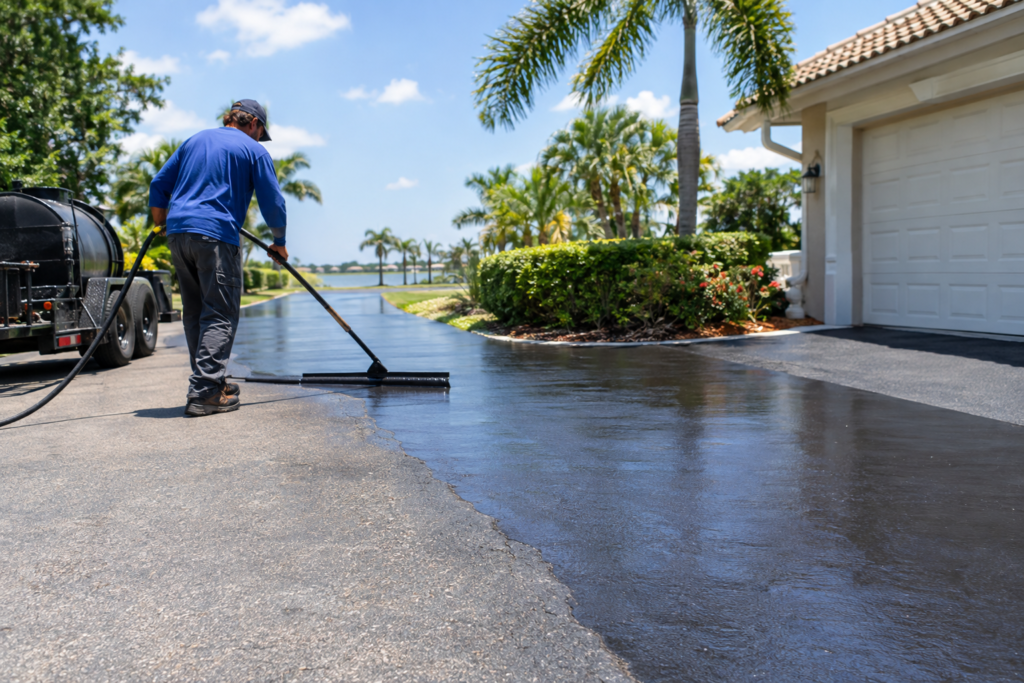
What Is Asphalt Sealcoating?
Sealcoating is the application of a protective coating over an existing asphalt surface. The coating creates a thin layer that helps reduce direct exposure to sunlight, moisture, and other environmental conditions that contribute to pavement deterioration.
Asphalt contains a mixture of aggregates and a petroleum-based binder that holds those materials together. Over time, ultraviolet radiation and oxidation gradually change the binder, making the surface more brittle. When asphalt becomes brittle, it is more vulnerable to cracking, surface wear, and water infiltration.
A properly applied sealcoat helps slow some of these processes. It can also restore a darker, more uniform appearance to faded pavement, making driveways and parking areas look cleaner and better maintained.
However, sealcoating is a preventive maintenance treatment, not a substitute for repairing damaged asphalt. Existing potholes, deep cracks, and areas with structural failure need appropriate repairs before a coating is applied.
Why Southwest Florida Weather Makes Sealcoating Important
Southwest Florida presents several environmental challenges for asphalt. Property owners in Naples, Fort Myers, Cape Coral, and surrounding communities should consider how local weather affects pavement throughout the year.
Intense Sunlight and UV Exposure
Florida receives strong sunlight for much of the year. Ultraviolet radiation contributes to asphalt oxidation, a process that gradually hardens the binder and reduces its flexibility.
As the binder ages, the pavement may become gray and brittle. Small cracks can develop and spread, eventually allowing water to enter the underlying layers.
Routine sealcoating can help limit direct exposure to damaging environmental conditions. Although it cannot stop aging entirely, it can support a maintenance strategy designed to extend the useful life of suitable asphalt.
High Temperatures
Hot weather can affect asphalt in different ways. While asphalt is designed to tolerate normal temperature changes, sustained heat can soften the pavement under certain conditions, especially when combined with heavy vehicle traffic or an inadequate pavement structure.
Sealcoating is not a solution for rutting, sinking, or structural weakness. Those problems require an assessment of the pavement and its base. Nevertheless, maintaining the surface can help reduce deterioration associated with weather exposure.
Heavy Rain and Standing Water
Southwest Florida experiences intense rainstorms, particularly during the summer and hurricane season. Water that enters cracks can weaken the supporting layers beneath asphalt, especially when drainage is poor.
A sound asphalt surface with properly maintained joints and cracks is less vulnerable to water penetration than pavement with extensive openings. Sealcoating helps protect the surface, but it does not make asphalt waterproof under every condition.
Drainage remains essential. If water regularly pools in a driveway or parking lot, the cause should be investigated rather than covered with a new coating.
Sand, Dirt, and Daily Traffic
Sand, debris, vehicle tires, and routine use gradually affect pavement appearance. Commercial parking lots may experience additional wear from delivery vehicles, turning tires, and frequent braking.
Sealcoating can help produce a more consistent surface appearance and make routine cleaning easier. It is especially useful when included in a broader maintenance plan that addresses drainage, cracks, traffic patterns, and timely repairs.
What Sealcoating Actually Does for Asphalt
The primary purpose of sealcoating is to protect and maintain an existing asphalt surface. Its benefits are most noticeable when the pavement is in reasonably good condition before treatment.
Helps Slow Oxidation
Oxidation contributes to the hardening and aging of asphalt binder. By providing a protective surface layer, sealcoating helps reduce exposure to environmental factors that accelerate surface deterioration.
This protection is not permanent. Weather, traffic, and normal wear gradually reduce the coating’s effectiveness, which is why periodic inspection matters.
Improves Pavement Appearance
Fresh asphalt gradually changes from black to gray as it ages. A new sealcoat can restore a darker, more uniform finish, helping residential driveways and commercial parking areas look cleaner.
For businesses, a well-maintained parking area can contribute to a more professional first impression. For homeowners, it can improve the appearance of the property’s entrance and driveway.
Supports Preventive Maintenance
Preventive maintenance is generally more effective when problems are addressed before they become extensive. Sealcoating can be part of that approach, alongside crack filling, drainage improvements, and localized asphalt repairs.
It is important to understand that sealcoating does not rebuild the pavement’s foundation. If the underlying base has failed, applying a coating will not correct the problem.
Can Help Reduce Surface Wear
Depending on the product used and the pavement’s condition, a sealcoat can provide a protective layer against everyday surface exposure. It can also help limit the effects of minor surface abrasion.
The degree of protection depends on proper preparation, the coating formulation, application conditions, and the amount of traffic the pavement receives.
When Should You Sealcoat Asphalt?
Timing depends on the age, condition, and use of the pavement. Newly installed asphalt typically needs time to cure before a sealcoat is applied. The appropriate waiting period varies with the asphalt mix, weather, and product manufacturer’s recommendations.
Applying a coating too early can interfere with the development of a suitable surface. Waiting too long, however, may allow oxidation and minor surface deterioration to progress unnecessarily.
For established pavement, property owners should look for signs such as:
- A faded gray appearance across the surface.
- Minor surface wear without major structural damage.
- Small cracks that can be properly repaired before coating.
- A need to improve the appearance of a driveway or parking area.
- An approaching maintenance interval recommended by a qualified contractor.
There is no single schedule that works for every property. Some surfaces may benefit from inspection every year and sealcoating every few years, depending on traffic, weather exposure, and product guidance. A professional evaluation is more useful than automatically applying a new coat on a fixed schedule.
The Importance of Proper Preparation
One of the biggest factors affecting the quality of a sealcoating project is preparation. Even a good product may perform poorly when applied over dirt, loose material, standing water, or unrepaired damage.
Step 1: Inspect the Asphalt
The contractor should examine the pavement for cracks, potholes, drainage issues, loose aggregate, oil spots, and signs of structural failure.
This inspection helps determine whether sealcoating is appropriate. If large sections are crumbling or sinking, repairs or resurfacing may be more suitable than a surface treatment alone.
Step 2: Clean the Surface
Dirt, leaves, sand, grass, and other debris must be removed before application. Contractors may use blowers, brooms, or other suitable cleaning equipment.
Oil and fuel stains require special attention because they can interfere with adhesion. Depending on the severity, affected areas may need specialized preparation or repair.
Step 3: Repair Cracks and Damaged Areas
Crack filling and patching should be completed where necessary. The correct repair method depends on the size, depth, and condition of the damage.
Sealcoating should not simply be spread over open cracks or potholes. Doing so can hide visible problems temporarily without resolving their underlying causes.
Step 4: Check Weather and Surface Conditions
The pavement needs to be suitable for application, and the weather must allow the coating to cure properly. Rain, excessive moisture, and unsuitable temperatures can interfere with the finished result.
In Southwest Florida, afternoon storms make scheduling particularly important. A responsible contractor should account for the forecast and allow enough time for drying and curing.
How Professional Sealcoating Is Applied
Once preparation is complete, the contractor applies the coating according to the product manufacturer’s specifications.
Application methods may include spray equipment, squeegees, or brushes, depending on the project, pavement layout, and material. The goal is to create an even coating without excessive buildup, missed areas, or contamination.
Some projects require more than one coat, while others may be completed with a single application. The correct approach depends on the product instructions, surface condition, and intended use.
After application, the pavement must remain closed to vehicles and pedestrians for the recommended curing period. Driving on the surface too soon can cause tire marks, tracking, or damage to the coating.
A professional job should include clear instructions about when the driveway or parking lot can be used again. Contractors should also explain how rain, humidity, and temperature may affect the curing process.
What Should a Professional Sealcoating Job Include?
Choosing a contractor involves more than comparing prices. A low quote may not include the preparation and repairs needed for a durable result.
Before hiring a professional, confirm that the estimate addresses the following:
- Surface inspection: The contractor checks whether the asphalt is suitable for sealcoating.
- Cleaning and preparation: Loose debris, dirt, and other contaminants are removed.
- Necessary repairs: Cracks and damaged areas are identified and addressed separately as appropriate.
- Suitable materials: The coating product is appropriate for the pavement and intended use.
- Proper application: The coating is applied evenly and according to manufacturer instructions.
- Weather planning: Application is scheduled under suitable conditions.
- Curing instructions: The contractor explains how long the surface must remain closed.
- Clear pricing: The estimate identifies included work and any additional repair costs.
A dependable paving professional should also explain when sealcoating is not the right choice. If the asphalt has serious structural damage, an honest recommendation may involve patching, resurfacing, or replacement instead.
Common Sealcoating Mistakes to Avoid
Property owners can get better results by avoiding several common mistakes.
Applying Sealcoat Over Unrepaired Damage
Coating does not fix potholes, deep cracks, or a failing base. These issues should be assessed and repaired before the surface is treated.
Ignoring Drainage Problems
Standing water can accelerate pavement deterioration. If water repeatedly collects in one area, the drainage or grading problem needs attention.
Applying the Coating in Poor Weather
Rain or unsuitable surface conditions can interfere with adhesion and curing. Scheduling should take local weather into account instead of relying on convenience alone.
Reopening the Pavement Too Soon
Fresh sealcoat needs adequate time to cure. Early traffic can damage the finish and lead to an uneven appearance.
Choosing a Contractor Based Only on Price
Preparation, product quality, and application practices all affect the result. A detailed estimate makes it easier to compare services fairly.
Sealcoating Versus Asphalt Resurfacing
Sealcoating and resurfacing serve different purposes.
Sealcoating adds a protective layer to asphalt that is still structurally sound. It is intended primarily for maintenance and surface protection.
Resurfacing involves placing a new asphalt layer over an existing pavement after evaluating its condition and preparing it appropriately. It may be suitable when the surface has more extensive wear but the underlying pavement can still support a new layer.
If the asphalt has widespread potholes, significant rutting, sinking, or extensive structural failure, neither a simple sealcoat nor an automatic resurfacing recommendation should replace a proper assessment.
The best option depends on the severity of the damage, drainage, traffic demands, and the condition of the pavement foundation.
Finding the Right Paving Professional in Naples
Property owners looking for a paving company Naples residents can rely on should ask about the contractor’s experience with Southwest Florida conditions, preparation process, repair services, and recommended maintenance schedule.
A qualified professional should explain what the asphalt needs rather than automatically recommending the same service for every property. Ask whether crack filling, patching, drainage correction, or other work should be completed before sealcoating.sealcoatinghttps://www.paramountsealcoating.com/
It is also useful to request a written estimate that identifies the coating application, preparation work, repairs, curing instructions, and any exclusions. This helps prevent misunderstandings and makes it easier to compare proposals.
For commercial properties, ask how the contractor will manage traffic, coordinate access, and minimize disruption to employees, customers, and deliveries. Residential customers should confirm when vehicles can return to the driveway and whether any special precautions are needed.
The goal is to select a contractor who understands that pavement maintenance is a process, not simply a fresh layer of black coating.
How to Maintain Asphalt After Sealcoating
After the coating has cured, regular maintenance helps protect the investment.
Inspect the pavement periodically for cracks, loose edges, standing water, and new surface damage. Address small problems early instead of allowing them to spread.
Keep drains and nearby drainage channels clear of debris. Remove oil and fuel spills promptly using methods appropriate for the pavement and local environmental requirements. Avoid dragging heavy equipment across the surface or allowing unnecessary concentrated loads.
Pay attention to areas where vehicles turn sharply, brake frequently, or remain parked for long periods. These locations may experience different wear patterns from the rest of the pavement.
Finally, schedule periodic professional inspections. A contractor can help determine when additional crack repairs or another sealcoat may be appropriate based on the actual condition of the asphalt.
Is Sealcoating Worth It in Southwest Florida?
For asphalt that remains structurally sound, sealcoating can be a useful part of a preventive maintenance plan. It helps protect the surface from environmental exposure, improves appearance, and supports a more proactive approach to pavement care.
Its value depends on realistic expectations. Sealcoating does not eliminate weather damage, fix drainage, or restore a failed pavement foundation. It works best when the asphalt is inspected, cleaned, repaired as needed, and coated under suitable conditions.
For homeowners and commercial property managers throughout Southwest Florida, understanding these details makes it easier to evaluate estimates and avoid unnecessary work. With appropriate preparation and ongoing maintenance, sealcoating can help keep asphalt looking better and performing well for longer.
The key is to treat sealcoating as one part of a comprehensive pavement maintenance strategy, supported by timely repairs and advice from an experienced paving professional.
Frequently Asked Questions
1. What does sealcoating do to asphalt?
Sealcoating applies a protective layer over existing asphalt. It helps reduce exposure to sunlight, moisture, and everyday surface wear while improving the pavement’s appearance. It does not repair structural damage.
2. How often should asphalt be sealcoated in Southwest Florida?
The ideal interval depends on pavement condition, traffic, weather exposure, and the coating product used. Many properties benefit from periodic inspections and sealcoating every few years when appropriate. A contractor should recommend timing based on the actual surface.
3. Does sealcoating prevent asphalt cracks?
Sealcoating can help slow certain forms of surface deterioration, but it cannot guarantee that cracks will not develop. Existing cracks should be evaluated and repaired using appropriate methods before the coating is applied.
4. Can sealcoating be applied before summer rain?
It can be applied when weather and surface conditions meet the product manufacturer’s requirements. The contractor needs to account for rain forecasts, humidity, and curing time to reduce the risk of a poor finish.
5. How long does sealcoating take to dry?
Drying and curing times vary by product, temperature, humidity, and application thickness. Follow the contractor’s instructions and do not reopen the pavement until the recommended waiting period has passed.
6. Is sealcoating suitable for old asphalt?
It may be suitable if the asphalt is still structurally sound and the surface can be properly prepared. Severely cracked, crumbling, sunken, or pothole-filled pavement may need repairs, resurfacing, or replacement first.
7. Does sealcoating make asphalt waterproof?
No. Sealcoating helps protect the surface from moisture, but it does not make the entire pavement system waterproof. Proper drainage and timely crack repairs remain important.
8. What should I ask a paving company before hiring it?
Ask about the inspection, cleaning, crack repairs, coating product, application method, weather requirements, curing time, written pricing, and any work excluded from the estimate. A good contractor should explain whether sealcoating is appropriate for your asphalt.