

Understanding Environmental Compliance Requirements
Environmental regulations can be complicated because requirements vary according to the type of facility, materials used, waste generated, emissions produced, and activities performed at a property.
For example, wastewater discharges may fall under the National Pollutant Discharge Elimination System, or NPDES. Ohio EPA administers individual and general NPDES permits, as well as programs covering industrial stormwater, construction, pretreatment, and other discharge activities.
Waste management creates another area of responsibility. Ohio maintains regulatory programs covering facilities and activities such as solid waste, construction and demolition debris, infectious waste, scrap tires, composting, and other waste-related operations.
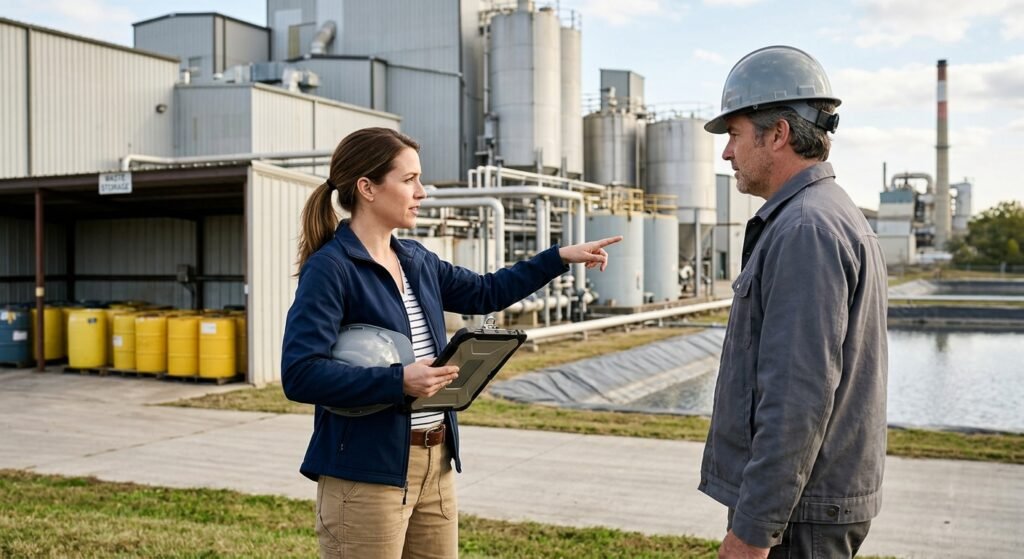
An environmental compliance consultant helps a company determine which requirements apply to its operations. Instead of treating compliance as a collection of unrelated rules, the consultant can help organize obligations into a practical management process.
Identifying Compliance Risks Before They Become Problems
One of the most important ways an environmental compliance consultant protects a business is by identifying potential problems before they result in enforcement action.
A compliance review may examine permits, operating procedures, waste storage areas, inspection records, monitoring information, employee training, reporting practices, and environmental documentation. The goal is to determine whether actual operations match regulatory requirements and permit conditions.
Small issues can become more difficult when they remain unaddressed. For example, missing documentation may make it difficult to demonstrate that required inspections occurred. Incomplete records can also complicate responses to regulatory inquiries.
Regular compliance reviews give businesses an opportunity to identify weaknesses and establish corrective measures. This proactive approach can help management address issues while they are still manageable.
Helping Businesses Manage Permits and Reporting
Environmental permits often contain specific operating requirements and reporting obligations. Depending on the facility, these may involve air emissions, wastewater discharges, stormwater, hazardous waste, solid waste, or other environmental activities.
Ohio EPA’s eBusiness Center provides regulated businesses and consultants with electronic services for activities such as permit applications, permit modifications, annual emissions reporting, wastewater reports, hazardous waste reporting, and facility registrations.
An environmental compliance consultant can help organize these responsibilities so important dates and submissions do not get overlooked. A consultant may assist with gathering information, reviewing documentation, preparing reports, and establishing internal procedures for future reporting cycles.
This can be particularly valuable for companies without dedicated environmental personnel. Instead of expecting operations or administrative employees to manage complex environmental requirements on their own, businesses can receive specialized guidance when needed.
Improving Environmental Recordkeeping
Documentation is an important part of environmental compliance. A business may perform inspections, collect samples, manage waste, monitor equipment, or complete required training, but those activities still need to be documented appropriately.
A strong recordkeeping system can help a company demonstrate that required procedures are being followed. It can also make it easier to identify trends and investigate unusual results.
An environmental compliance consultant can review existing records and help establish consistent procedures for maintaining them. This may include organizing permits, inspection forms, waste manifests, monitoring records, training documentation, correspondence, reports, and corrective action records.
Good documentation can also make regulatory interactions more efficient. Ohio EPA maintains an electronic document search system containing public records associated with regulated entities, demonstrating the importance of organized regulatory documentation and reporting.
Supporting Employees With Environmental Training
Environmental compliance is not only a management responsibility. Employees often perform the daily activities that determine whether a facility remains compliant.
Workers may handle waste containers, operate production equipment, inspect environmental controls, respond to spills, maintain records, or perform other tasks that have environmental implications.
An environmental compliance consultant can help businesses identify training needs and develop procedures employees can understand and follow. Training may address waste handling, spill response, inspections, environmental documentation, chemical management, or other site-specific responsibilities.
Clear procedures help employees understand what is expected of them. Training can also provide management with a way to reinforce environmental responsibilities throughout the organization.
Preparing for Inspections and Regulatory Questions
Environmental inspections can be stressful when a business does not know whether its records and procedures are complete. Preparation can make the process more organized.
A consultant can conduct an internal review designed to identify areas that may need attention before an inspection. This may involve reviewing permits, records, physical conditions, operating practices, and employee knowledge.
The purpose is not to predict exactly what a regulator will ask. Instead, it is to help the company understand its own compliance position and correct known deficiencies.
Regulatory enforcement actions can sometimes require companies to conduct environmental audits, revise procedures, create new standard operating procedures, provide employee training, and pay penalties. An Ohio EPA enforcement order from 2024, for example, required a facility to undergo a focused environmental audit and review or develop procedures related to hazardous waste compliance.
Proactive compliance work can therefore help businesses identify and address weaknesses before they become part of a formal enforcement matter.
Helping Reduce the Risk of Environmental Penalties
An environmental compliance consultant helps Ohio facilities avoid penalties.
This does not mean a consultant can guarantee that a business will never receive a violation or enforcement action. Environmental regulations are complex, and compliance depends on the company’s operations, employees, equipment, management practices, and response to regulatory requirements.
However, identifying problems early can reduce the likelihood that avoidable compliance failures will continue unnoticed. A consultant can help management understand what needs to be corrected and establish procedures designed to prevent recurring problems.
The financial consequences of noncompliance can include penalties, corrective work, additional monitoring, operational disruptions, and professional costs associated with resolving regulatory matters. Ohio EPA enforcement records illustrate that environmental enforcement can involve both monetary penalties and required corrective actions.
Supporting Better Environmental Management
Compliance should not be viewed only as a regulatory obligation. Environmental management can also support better operational control.
When a company tracks waste streams, reviews emissions, monitors wastewater, maintains equipment, and documents procedures, management can gain a clearer understanding of how operations affect the environment.
An environmental compliance consultant can help connect environmental requirements with everyday business processes. This may make it easier to identify inefficient practices, improve documentation, establish accountability, and create repeatable procedures.
Ohio EPA has also promoted pollution prevention and energy conservation as opportunities that can reduce environmental impacts while potentially helping businesses save money.
When Should a Business Hire an Environmental Compliance Consultant?
Businesses do not necessarily need to wait until they receive a notice of violation before seeking professional assistance.
A consultant may be useful when a company is opening or expanding a facility, changing production processes, applying for permits, preparing for an inspection, experiencing operational changes, managing environmental incidents, or reviewing its existing compliance program.
Professional assistance can also be valuable when responsibilities have become too complicated for existing staff to manage effectively.
Companies that are unsure whether their current practices meet applicable requirements can benefit from an independent compliance review. The consultant can help identify potential gaps and prioritize corrective actions based on the company’s operations and regulatory responsibilities.
Choosing an Environmental Compliance Consultant
Businesses should consider several factors when selecting an environmental compliance consultant. Relevant experience is important because environmental requirements can differ significantly between industries and facility types.
Companies should also consider whether the consultant understands the regulatory environment applicable to the facility, communicates clearly, provides practical recommendations, and can help with documentation and implementation rather than simply identifying problems.
The right consultant should work with management and employees to create realistic compliance procedures. Recommendations are more useful when they can be incorporated into everyday operations.
Protecting Your Business Through Proactive Compliance
Environmental compliance is an ongoing responsibility. Permits change, regulations can be updated, facilities expand, production processes evolve, and employee responsibilities shift.
Working with an environmental compliance consultant can give businesses additional support for managing these changes. From compliance assessments and permitting support to recordkeeping, employee training, inspection preparation, and corrective action planning, professional guidance can help companies build a more organized approach to environmental responsibilities.
For Ohio businesses, proactive environmental management can provide a structured way to identify potential issues before they become more expensive or disruptive. A consultant can help management understand applicable requirements, establish procedures, maintain documentation, and address identified deficiencies.
The result is a compliance program that is integrated into daily business operations rather than treated as an occasional administrative task.
FAQs
What does an environmental compliance consultant do?
An environmental compliance consultant helps businesses understand and manage environmental requirements that apply to their operations. Services may include compliance assessments, permitting assistance, environmental reporting, recordkeeping reviews, employee training, inspection preparation, and corrective action planning.
Why do Ohio businesses need environmental compliance support?
Ohio businesses may be subject to requirements involving air emissions, wastewater, stormwater, waste management, hazardous materials, and other environmental activities. The requirements applicable to a facility depend on its operations and permits. Professional assistance can help businesses identify and manage these responsibilities.
Can an environmental compliance consultant help with environmental inspections?
Yes. A consultant can perform internal compliance reviews, examine records and procedures, identify potential gaps, and help employees prepare for regulatory inspections. The objective is to improve the company’s understanding of its compliance responsibilities and address known issues.
Can a consultant help with environmental permits?
Yes. Depending on the consultant’s services and the facility’s needs, an environmental compliance consultant may help with permit applications, modifications, reporting requirements, documentation, and understanding permit conditions.
How can environmental compliance consulting reduce business risk?
Compliance consulting can help identify potential problems before they develop into larger issues. By improving procedures, documentation, employee training, monitoring, and reporting practices, businesses can establish stronger systems for managing environmental obligations.
Is environmental compliance only important for large companies?
No. Environmental requirements can apply to businesses of different sizes depending on their activities, location, waste streams, emissions, discharges, and other factors. Smaller businesses may particularly benefit from outside expertise if they do not have dedicated environmental compliance staff.
What should a company do if it discovers a compliance problem?
The appropriate response depends on the nature and severity of the issue. Businesses should promptly evaluate the situation, review applicable requirements and permits, document relevant information, and determine whether notifications or corrective actions are required. An environmental compliance consultant can help assess the situation and develop an appropriate corrective action plan.