

What Is Class IV Laser Therapy?
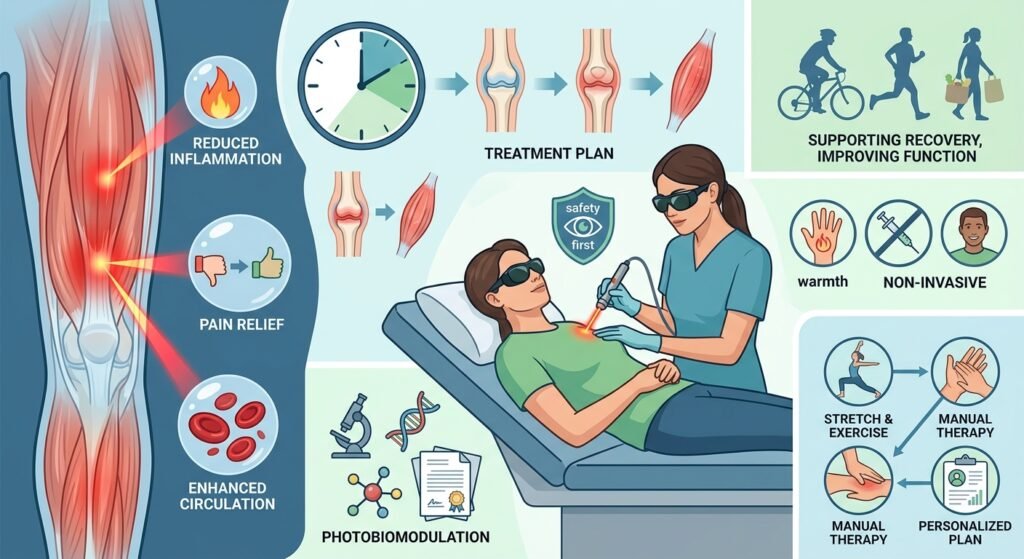
Class IV laser therapy is a high-powered form of therapeutic laser treatment designed to deliver light energy into targeted areas of the body. The term “Class IV” refers to the laser’s regulatory hazard classification, not a measurement of how effective the treatment is. Class IV lasers are powerful and require appropriate safety procedures, particularly to protect the eyes from direct or reflected exposure.
In therapeutic settings, the device is applied by a trained professional to a specific treatment area. The provider determines the appropriate settings based on factors such as the location of the problem, the tissue involved, the patient’s condition, and the treatment goal.
The therapy is generally intended to stimulate biological responses within tissue through light energy. This process is commonly discussed under the broader concept of photobiomodulation. Current research suggests photobiomodulation may have effects on pain and function for certain conditions, although the strength of evidence differs among conditions.
What Happens During a Class IV Laser Therapy Session?
One of the most common questions patients have is what the treatment actually feels like.
Before beginning, a healthcare professional typically evaluates the affected area and determines whether laser therapy is appropriate. The treatment area may be exposed so the laser applicator can be positioned correctly.
During class iv laser therapy, the practitioner moves the applicator over or near the targeted tissue. Treatment parameters can be adjusted according to the area being treated and the patient’s needs.
Depending on the device and settings, you may notice a feeling of warmth. The treatment should not generally feel like a painful procedure. Your provider should monitor your comfort throughout the session and adjust the treatment when necessary.
Protective eyewear is an important part of laser safety. Because high-powered lasers can cause eye injury if the beam reaches the eyes, appropriate eye protection and professional safety protocols are essential.
Is Class IV Laser Therapy Painful?
For many patients, laser therapy is comfortable and may create a mild warming sensation. It does not involve needles, incisions, or injections.
The experience can vary based on the treatment area, device, settings, and individual sensitivity. Some patients may feel warmth during treatment, while others notice very little sensation.
If the area being treated is already highly sensitive, it is important to communicate with the practitioner throughout the session. A personalized approach can help ensure the treatment is delivered appropriately.
How Long Does a Treatment Take?
The length of a class iv laser therapy session depends on the area being treated and the treatment plan. Smaller areas may require less time, while larger or multiple areas can take longer.
Your provider may recommend a series of treatments rather than expecting one session to resolve a chronic problem. The appropriate schedule depends on the condition being addressed and how your body responds.
It is important to avoid assuming that more treatment automatically means better results. Laser therapy is dose-dependent, and appropriate treatment parameters matter. Research continues to examine how factors such as wavelength, power, energy density, and treatment frequency influence outcomes.
What Conditions May Be Treated?
Therapeutic laser treatment may be incorporated into care for a variety of musculoskeletal complaints. Depending on the provider’s training and clinical approach, treatment may be considered for issues involving muscles, tendons, joints, and other soft tissues.
Potential applications may include:
- Muscle soreness and strain
- Tendon-related discomfort
- Joint pain
- Sports-related injuries
- Soft tissue irritation
- Certain chronic pain conditions
- Recovery following physical activity
- Some rehabilitation programs
Research has examined photobiomodulation and high-intensity laser therapy in areas including the knee, spine, shoulder, arm, foot, hand, and other regions. A 2026 systematic review reported encouraging findings for pain and functional outcomes across several musculoskeletal conditions, while also noting the need for additional research to refine treatment protocols.
That does not mean laser therapy is appropriate for every diagnosis. A proper evaluation should come first.
What Benefits Might You Notice?
The potential benefits of class iv laser therapy depend on the underlying condition and the individual’s response to treatment.
One of the primary reasons people consider laser therapy is pain management. Research involving photobiomodulation has found beneficial effects for pain and disability in certain conditions, although the certainty of evidence varies.
Other potential goals may include supporting tissue recovery, improving function, and helping patients participate more comfortably in rehabilitation.
The phrase A drug-free option that may accelerate tissue repair. is often used to describe one of the attractions of therapeutic laser treatment. However, it is important to understand that “may” matters. Laser therapy should not be presented as a guaranteed way to speed healing, and results can differ from one person to another.
What Should You Expect After Treatment?
There is usually little to no traditional downtime associated with therapeutic laser treatment. Patients can generally continue with their normal activities unless their healthcare provider recommends otherwise because of the underlying injury.
You may notice changes in discomfort or mobility over the course of treatment, but improvement is not necessarily immediate. Some people may notice changes relatively quickly, while others require multiple sessions as part of a broader rehabilitation program.
Your provider may also recommend exercises, stretching, manual therapy, activity modifications, or other interventions. Combining treatments can be important because laser therapy is generally most useful as one component of a comprehensive care plan.
How Many Sessions Will You Need?
There is no universal number of sessions that works for everyone.
The number and frequency of treatments can depend on:
- The type of condition being treated
- Whether the problem is acute or chronic
- The size and location of the treatment area
- The patient’s overall health and activity level
- The laser’s wavelength and treatment parameters
- The individual’s response to therapy
A healthcare professional should reassess progress rather than automatically continuing treatment indefinitely. If there is no meaningful improvement, the diagnosis and treatment strategy may need to be reconsidered.
Is Class IV Laser Therapy Safe?
Laser therapy can be used safely when appropriate equipment, treatment protocols, and safety procedures are followed. However, Class IV lasers are powerful devices and are not risk-free.
The FDA notes that Class IV lasers can pose immediate hazards to the skin and eyes when exposed to direct or reflected beams. This is why appropriate training and eye protection are especially important.
Patients should also tell their provider about relevant medical conditions, medications, implants, photosensitivity, or other factors that could affect whether light-based therapy is appropriate.
Certain light-based treatments may not be appropriate for people with specific photosensitivity disorders, active infections or lesions in the treatment area, certain cancers at the treatment site, or medications that increase photosensitivity. The appropriate precautions depend on the specific therapy and device being used.
How Does Laser Therapy Fit Into Conservative Care?
A major advantage of class iv laser therapy is that it can be incorporated into a larger conservative treatment program.
For example, someone experiencing musculoskeletal pain may benefit from a combination of therapeutic exercise, mobility work, manual therapy, activity modification, and other interventions. Laser therapy may be used to help manage symptoms while the patient works toward improved strength and function.
This is particularly relevant when the goal is not simply to reduce discomfort temporarily but to address contributing factors and restore normal movement.
Patients searching for conservative options in Southwest Florida may also encounter providers using the term Chiropractor Naples when looking for chiropractic and rehabilitation services. A qualified practitioner can determine whether laser therapy is appropriate based on the individual’s symptoms and overall treatment goals.
What Should You Ask Your Provider?
Before starting treatment, consider asking:
- What condition are we treating?
- Why is laser therapy appropriate for my situation?
- What results should I realistically expect?
- How many sessions may be recommended?
- Will laser therapy be combined with exercise or other treatments?
- Are there any reasons I should not receive this treatment?
- What safety precautions are used?
- How will we measure whether the treatment is helping?
These questions can help you understand whether the therapy makes sense as part of your individual care plan.
Class IV Laser Therapy vs. Other Pain Management Options
One reason patients explore laser therapy is that it can be used without injections or surgery. It may also appeal to people who prefer to minimize reliance on medication when appropriate.
However, that does not make it universally superior to other treatment options. Different conditions respond differently to different therapies, and some injuries require imaging, medication, surgery, or other specialized care.
The best treatment approach depends on the diagnosis, severity, duration of symptoms, previous treatment, and individual goals.
Is Class IV Laser Therapy Right for You?
If you are considering class iv laser therapy, the first step should be an appropriate clinical evaluation. Laser treatment is not a cure-all, and its effectiveness depends on many factors.
Current evidence is encouraging for several applications of photobiomodulation and high-intensity laser therapy, but research quality and outcomes vary across conditions. Recent reviews have found promising effects while emphasizing that additional high-quality research and standardized treatment protocols are still needed.
For the right patient, laser therapy may provide a non-invasive addition to a comprehensive rehabilitation strategy. The most useful way to approach it is to consider the therapy within the context of the patient’s diagnosis and broader recovery plan.
Final Thoughts
Knowing what to expect can make trying a new treatment much less intimidating. Class iv laser therapy is a non-invasive treatment that uses concentrated light energy to target specific tissues and may be incorporated into care for pain, soft tissue problems, and rehabilitation.
Treatment is generally straightforward, and patients may experience a warming sensation while the provider applies the laser to the affected area. The number of treatments and expected results vary depending on the individual and the condition being addressed.
Most importantly, laser therapy should be delivered by an appropriately trained professional using suitable safety precautions. When combined with a thoughtful rehabilitation program, it may be one option for people looking for conservative approaches to managing musculoskeletal discomfort and supporting recovery.
Frequently Asked Questions
What is class IV laser therapy?
Class IV laser therapy is a high-powered therapeutic laser treatment that delivers light energy to targeted areas of the body. It is commonly used as part of conservative care for certain musculoskeletal conditions and may help support pain management and functional recovery.
Does class IV laser therapy hurt?
Most patients describe the treatment as comfortable, although a warming sensation may occur. The experience varies depending on the treatment area, device, settings, and individual sensitivity.
How long does class IV laser therapy take?
Treatment time varies depending on the size and location of the area being treated and the specific protocol. Your provider can give you a more accurate estimate after evaluating your condition.
How many laser therapy sessions will I need?
There is no standard number of sessions. Treatment frequency and duration depend on your condition, symptoms, treatment goals, and response to therapy.
Can class IV laser therapy replace medication?
Laser therapy may be used as a drug-free component of conservative care, but it should not automatically be considered a replacement for medication or other medically appropriate treatment. Your healthcare provider can help determine the most appropriate approach.
Is class IV laser therapy safe?
It can be used safely when administered by trained professionals using appropriate protocols and protective equipment. Because Class IV lasers can cause eye and skin injuries, proper safety procedures are essential.
Can laser therapy help with sports injuries?
Laser therapy may be incorporated into rehabilitation for certain sports-related muscle, tendon, and joint problems. The appropriate treatment depends on the specific injury and should follow a proper evaluation.
Can I exercise after laser therapy?
Whether you should exercise immediately after treatment depends on your condition and rehabilitation plan. Your provider may recommend specific exercises or temporary activity modifications based on your injury.