

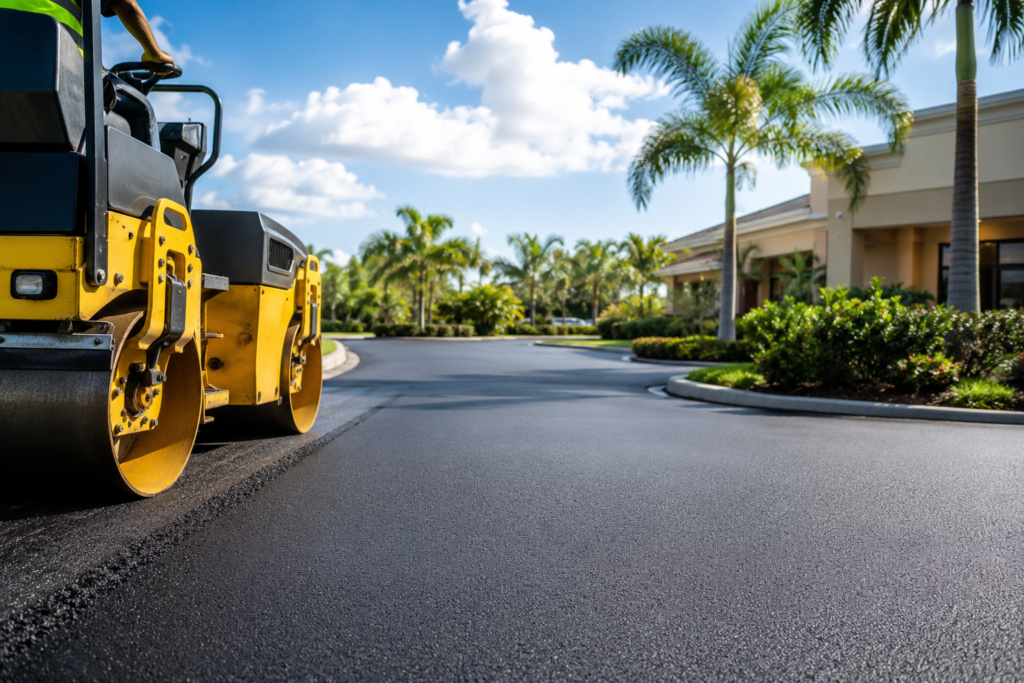
Why Seasonal Maintenance Matters
Unlike colder regions where freeze and thaw cycles are the biggest concern, Bonita Springs faces year-round exposure to UV rays, frequent afternoon storms, and heavy moisture. These environmental conditions slowly weaken asphalt by causing oxidation, surface deterioration, and water infiltration.
Routine inspections and seasonal maintenance help identify small issues before they become expensive structural problems. Regular crack sealing, sealcoating, drainage improvements, and pothole repairs can add years to the life of your pavement while reducing long-term maintenance costs.
Spring Maintenance Tips
Spring is one of the best times to evaluate asphalt after months of weather exposure. While Florida winters are mild, the cooler months and seasonal rainfall can still reveal hidden damage.
During spring, property owners should:
- Walk the entire pavement looking for cracks or uneven areas.
- Remove debris that blocks drainage.
- Schedule crack filling before summer storms arrive.
- Repair small potholes before they grow larger.
- Consider sealcoating if the previous application is several years old.
Spring temperatures often provide favorable conditions for many asphalt maintenance services, making it an ideal season to address developing issues.
Summer Protection Strategies
Summer brings some of the toughest conditions for asphalt in Bonita Springs. High temperatures soften pavement while strong UV exposure gradually dries out the asphalt binder.
To minimize damage during summer:
Keep Pavement Clean
Leaves, dirt, and standing debris trap moisture against the surface. Regular sweeping prevents unnecessary deterioration.
Address Oil Stains Quickly
Oil, gasoline, and automotive fluids break down asphalt over time. Cleaning spills immediately helps preserve the surface.
Monitor Heavy Traffic Areas
Commercial parking lots often experience accelerated wear in loading zones and entrances. These areas should be inspected more frequently.
Watch for Standing Water
Florida thunderstorms can produce heavy rainfall in a short period. Proper drainage prevents water from penetrating cracks and weakening the foundation beneath the asphalt.
Preparing for Florida’s Rainy Season
Rain is one of asphalt’s biggest enemies. Even small cracks allow moisture to reach the base layers, where it can gradually erode structural support.
Before the rainy season begins:
- Fill visible cracks.
- Repair damaged edges.
- Ensure catch basins remain clear.
- Improve drainage around low spots.
- Schedule preventive maintenance before heavy rains become frequent.
Preventing water intrusion is much less expensive than replacing damaged pavement later.
Fall Inspection Checklist
Fall offers another excellent opportunity to inspect asphalt before holiday traffic and seasonal business activity increase.
Property owners should:
- Examine pavement markings.
- Inspect sidewalks connected to parking lots.
- Check for loose aggregate.
- Schedule patch repairs where needed.
- Evaluate whether resurfacing may be necessary.
This is also a good time to review your annual maintenance budget and schedule improvements before the following year.
Winter Maintenance in Southwest Florida
Although Bonita Springs does not experience freezing temperatures like northern states, winter remains an important maintenance season.
Lower humidity and more predictable weather often make winter an excellent time for:
- Sealcoating projects
- Parking lot resurfacing
- New asphalt installations
- Line striping
- Drainage improvements
Planning larger projects during milder weather may reduce disruptions while allowing materials to cure under favorable conditions.
Signs Your Asphalt Needs Professional Attention
Many property owners delay repairs because damage initially appears minor. However, asphalt problems rarely improve without intervention.
Watch for these warning signs:
Widening Cracks
Small surface cracks quickly expand when exposed to rain and traffic.
Potholes
Potholes indicate deeper structural damage that requires prompt repair.
Fading Color
Gray asphalt often signals oxidation, meaning the protective oils have begun breaking down.
Standing Water
Persistent puddles usually indicate drainage issues or surface depressions.
Surface Raveling
Loose stones and rough texture often suggest the pavement is wearing out and may require resurfacing.
Early repairs typically cost much less than complete reconstruction.
Benefits of Preventive Asphalt Maintenance
Preventive maintenance offers numerous long-term advantages for both residential and commercial properties.
Some of the biggest benefits include:
- Longer pavement lifespan
- Lower repair costs
- Improved property appearance
- Increased safety
- Better drainage performance
- Enhanced property value
- Reduced liability risks
Routine maintenance protects both your investment and the people using your pavement every day.
Residential Asphalt Care Tips
Homeowners can help preserve their driveways between professional visits by following a few simple practices.
Avoid parking heavy trailers in the same location for extended periods.
Remove weeds growing along pavement edges.
Wash away fertilizer and landscaping chemicals after application.
Trim nearby trees to reduce root intrusion and debris accumulation.
Inspect the driveway several times each year for developing cracks.
Small maintenance efforts performed consistently often prevent larger repair bills.
Commercial Property Maintenance
Commercial parking lots require more frequent attention because of heavier traffic volumes.
Property managers should establish a regular inspection schedule that includes:
- Entrance and exit lanes
- Loading zones
- Accessible parking spaces
- Curbs
- Drainage structures
- Parking lot striping
- Pedestrian walkways
Businesses benefit from maintaining attractive, safe parking areas that create positive first impressions for customers.
Choosing the Right Asphalt Contractor
Not every contractor understands the challenges presented by Southwest Florida’s climate.
When selecting an asphalt contractor, consider:
- Experience with Florida paving projects
- Proper licensing and insurance
- Quality materials
- Comprehensive maintenance services
- Positive customer reviews
- Clear project timelines
- Detailed written estimates
An experienced contractor will recommend maintenance schedules tailored to your property’s traffic levels, drainage conditions, and pavement age.
Whether you’re managing a home or commercial property, Bonita Springs Asphalt Contractors delivers dependable asphalt protection designed to withstand heat, moisture, and heavy traffic.
Choosing knowledgeable professionals today can help avoid expensive repairs tomorrow while keeping your pavement looking its best throughout every season.
Final Thoughts
Florida weather creates unique challenges that require year-round attention. From intense sunshine to seasonal rainstorms, every season places different demands on asphalt surfaces. Fortunately, routine inspections, preventive maintenance, and timely repairs can dramatically extend pavement life while protecting your investment.
Whether you own a residential driveway, manage a commercial parking lot, or oversee a large community, partnering with experienced Bonita Springs Asphalt Contractors ensures your pavement remains durable, attractive, and safe for years to come. If you are also looking for a reliable paving company Naples, working with professionals who understand local climate conditions and proven maintenance practices can make all the difference.
Frequently Asked Questions
How often should asphalt be sealcoated in Bonita Springs?
Most asphalt surfaces benefit from sealcoating every 2 to 4 years, depending on traffic levels, weather exposure, and overall pavement condition.
What season is best for asphalt maintenance?
Spring, fall, and winter generally provide excellent conditions for maintenance projects due to moderate temperatures and lower chances of heavy rainfall.
Can heavy rain damage asphalt?
Yes. Water entering cracks can weaken the pavement base, eventually leading to potholes, erosion, and structural failure if left untreated.
How can I extend the life of my asphalt driveway?
Regular cleaning, prompt crack repairs, proper drainage, sealcoating, and periodic professional inspections all help maximize pavement lifespan.
When should I replace instead of repair asphalt?
If large portions of the pavement show widespread cracking, severe rutting, multiple potholes, or foundation failure, resurfacing or replacement may be more cost effective than repeated repairs.