

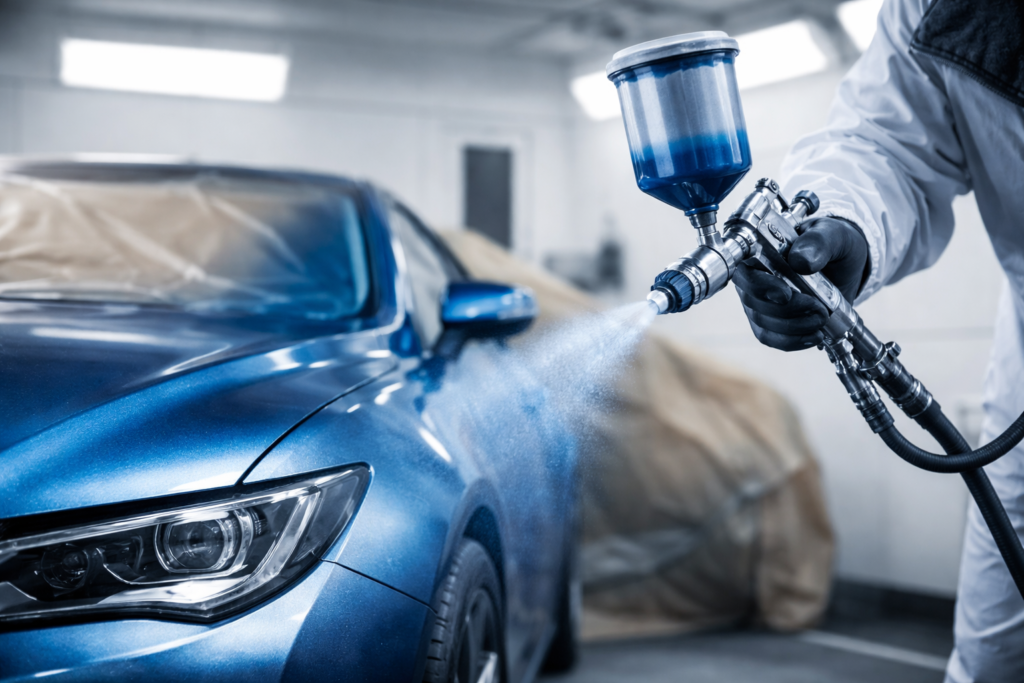
What Is Auto Base Coat Paint
Auto base coat paint is the colored layer applied to a vehicle between the primer and the clear coat. It contains the pigments and color components that give the vehicle its visible appearance.
Modern automotive paint systems typically follow this structure:
Primer
Base coat
Clear coat
The primer prepares and seals the surface. The base coat provides the color and visual depth. The clear coat protects the paint while adding shine and durability.
The base coat is responsible for producing the rich color and smooth consistency that people notice when they see a freshly painted vehicle.
The Role of Car Base Coat in Automotive Paint Systems
The base coat serves as the visual foundation of a vehicle’s paint job. Without a properly applied base coat, the final finish will appear dull, uneven, or inconsistent.
High quality car base coat paint offers several benefits including:
Color accuracy
Even coverage
Improved adhesion
Enhanced visual depth
Compatibility with protective clear coats
This layer works together with the primer underneath and the clear coat above to form a durable and visually appealing finish.
Why Base Coat Paint Is Essential for Professional Results
Professional automotive painters rely on base coat systems because they deliver superior visual results compared to older single stage paint systems.
Superior Color Consistency
Base coats are designed to spread evenly across the surface of the vehicle. This ensures that the color appears consistent across all panels including doors, fenders, hoods, and bumpers.
Without a quality base coat, vehicles can develop patchy color areas that reduce their overall appearance and resale value.
Enhanced Depth and Vibrancy
Modern base coat formulas contain advanced pigments and metallic or pearl additives that create rich color depth. When paired with a clear coat, these pigments reflect light more effectively and produce a glossy showroom appearance.
This is why professionally painted vehicles often appear brighter and more vibrant than basic paint jobs.
Smooth Surface for Clear Coat Application
Another important role of base coat paint is creating a smooth surface for the clear coat layer. A properly applied base coat allows the clear coat to bond evenly and cure correctly.
This results in a finish that looks glossy while also protecting the paint from environmental damage.
Improved Durability
While the clear coat provides the majority of surface protection, the base coat contributes to the overall durability of the paint system.
A well applied base coat helps prevent issues such as color fading, peeling, and uneven wear. This ensures that the vehicle maintains its appearance for a longer period of time.
The Difference Between Base Coat and Single Stage Paint
Many older vehicles used single stage paint systems that combined color and protection into one layer. While these systems were easier to apply, they lacked the durability and visual quality of modern base coat and clear coat systems.
Key differences include:
Single stage paint combines pigment and protection in one layer.
Base coat systems separate color and protection into two layers.
Base coat systems provide deeper color and stronger gloss.
Clear coat protection improves scratch resistance and UV protection.
For professional automotive refinishing, the base coat and clear coat system has become the industry standard.
The Base Coat Application Process
Applying base coat paint correctly requires attention to detail and proper preparation.
Surface Preparation
Before any paint is applied, the vehicle surface must be cleaned, sanded, and primed. This step removes contaminants and creates a surface that allows the base coat to bond properly.
Mixing and Preparation
Base coat paint must be mixed according to manufacturer specifications. Proper mixing ensures the pigments remain evenly distributed and prevents color variations.
Spray Application
Base coat is typically applied using a professional spray gun in thin layers. Several coats are applied until the desired color coverage is achieved.
Each coat must be allowed to flash or partially dry before the next layer is applied.
Clear Coat Application
Once the base coat has cured properly, a protective clear coat is applied. This step seals the color layer and adds the glossy finish most people expect from professional automotive paint.
Common Mistakes When Applying Base Coat Paint
Even though base coat systems are widely used, improper application can lead to visible flaws in the finish.
Common mistakes include:
Applying coats that are too thick
Skipping proper surface preparation
Using low quality paint products
Incorrect mixing ratios
Applying clear coat before the base coat has properly flashed
Avoiding these issues helps ensure the finished paint job looks smooth and professional.
Choosing High Quality Base Coat Paint
Not all automotive paints are created equal. Choosing a high quality base coat is essential for achieving professional results.
When selecting paint, consider the following factors:
Color accuracy and pigment quality
Compatibility with clear coat systems
Manufacturer reputation
Ease of application
Resistance to fading and UV damage
Professional grade paints often provide better coverage and require fewer coats, making them more efficient and reliable.
The Long Term Benefits of Proper Base Coat Application
Investing time and effort into proper base coat application provides long term benefits for vehicle owners.
These benefits include:
Improved vehicle appearance
Greater resistance to fading
Longer lasting paint protection
Higher resale value
Better resistance to environmental damage
Vehicles that receive high quality paintwork tend to maintain their visual appeal for many years, especially when combined with proper maintenance and protective coatings.
Maintaining a Professional Automotive Paint Finish
After a vehicle has been painted, proper maintenance helps preserve the quality of the finish.
Recommended maintenance practices include:
Regular washing to remove dirt and contaminants
Applying protective wax or sealants
Avoiding harsh chemicals that damage clear coat
Parking in shaded or covered areas when possible
Proper care helps maintain the shine and color produced by the base coat and clear coat system.
Why Professional Painters Prefer Base Coat Systems
Automotive professionals prefer base coat paint systems because they provide consistent, reliable, and visually impressive results.
The combination of primer, base coat, and clear coat creates a balanced system that protects the vehicle while producing the deep color and shine drivers expect.
For anyone seeking a professional quality finish, understanding and using the correct base coat system is an essential step in the painting process.
Conclusion
Auto base coat paint plays a critical role in creating high quality automotive finishes. It provides the color, depth, and visual consistency that defines a professional paint job while working together with primer and clear coat layers to ensure durability.
Using car base coat can significantly enhance the final appearance and durability of your vehicle’s paint job. It’s crucial to choose high-quality materials and follow proper application techniques for the best results.
By investing in the right products and applying them correctly, vehicle owners and professionals alike can achieve a smooth, vibrant, and long lasting paint finish that enhances both the appearance and value of any vehicle.
Frequently Asked Questions
What does base coat paint do on a car?
Base coat paint provides the color layer of a vehicle’s paint system. It contains the pigments that determine the vehicle’s appearance and works with clear coat to produce a glossy and durable finish.
How many coats of base coat should be applied?
Most automotive paint jobs require two to four coats of base coat paint. The exact number depends on the color, paint quality, and level of coverage needed.
Can you apply clear coat directly over primer?
No. Clear coat should only be applied over a properly cured base coat layer. Applying clear coat over primer will not produce the correct finish or protection.
How long should base coat dry before clear coat?
Base coat typically needs to flash for 15 to 30 minutes between coats and before clear coat application. However, drying times vary depending on temperature, humidity, and manufacturer instructions.
Is base coat paint durable on its own?
Base coat paint is not designed to provide full protection by itself. It must be sealed with a clear coat to protect the color from UV rays, moisture, and environmental damage.