

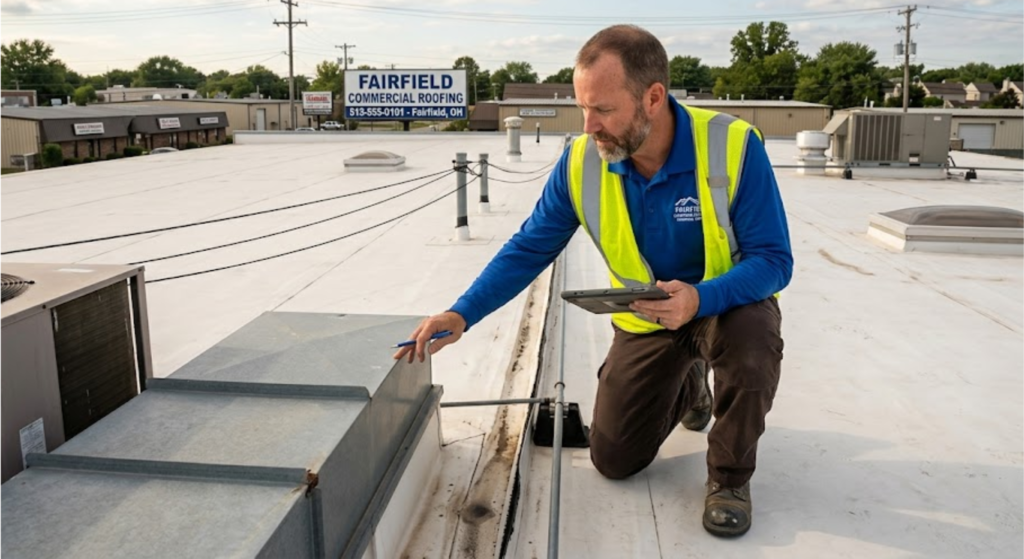
Operating a business or managing an industrial facility in Butler County comes with a unique set of infrastructural challenges. The climate in Fairfield, Ohio, is notoriously demanding, subjecting commercial properties to a relentless cycle of extreme weather. From heavy spring downpours and blistering summer UV rays to freezing winter temperatures and ice accumulation, your building’s exterior is in a constant battle against the elements. At the very forefront of this defense line is your commercial roof system.
When a commercial roof begins to fail, the consequences escalate rapidly. What starts as a minor, unseen membrane separation can quickly evolve into catastrophic interior water damage, ruined inventory, compromised structural integrity, and costly operational downtime. Recognizing the early warning signs of roof degradation is the key to proactive facility management. Catching problems early allows building owners to execute cost-effective maintenance rather than emergency overhauls. Clients trust Commercial Roofing Fairfield OH for leak repairs, roof coatings, and complete installations backed by manufacturer warranties. To help you protect your commercial investment, here is a comprehensive guide to the top signs that your facility urgently requires professional roofing attention.
1. Visible Interior Moisture and Water Intrusion
The most alarming and immediate indicator of commercial roof failure is visible water inside your building. However, by the time water is actively dripping onto an office desk or a warehouse floor, the underlying damage to your roof deck and insulation has likely been progressing for quite some time.
Facility managers should conduct routine walkthroughs, keeping a vigilant eye out for these early interior warning signs:
- Discolored Ceiling Tiles: Yellow, brown, or gray ring-like water stains on suspended acoustic ceiling panels are the classic first sign of a slow, persistent leak originating from the roof deck above.
- Bubbling or Peeling Paint: When moisture becomes trapped inside structural walls, it destroys the adhesion of interior paint and wallpaper, causing it to bubble outward and flake away.
- Unexplained Musty Odors: A persistent damp smell within the facility often indicates that rainwater has saturated the internal fiberglass or polyiso insulation, creating a breeding ground for hazardous mold and mildew.
2. Blistering, Bubbling, and Membrane Damage
Regular physical inspections of the exterior roof surface are critical. Most commercial facilities in Fairfield utilize flat or low-slope single-ply roofing membranes, such as TPO (Thermoplastic Polyolefin), EPDM (Rubber), or PVC. Over years of thermal expansion and contraction, these materials physically break down.
When walking the roof, look out for the following surface defects:
- Blistering and Bubbling: If air or moisture becomes trapped beneath the membrane, it will expand under the heat of the sun, causing the roof surface to bubble up like a blister. If these blisters rupture, the underlying insulation is left completely exposed to the rain.
- Shrinkage and Seam Separation: EPDM roofs are particularly prone to shrinkage as they age. As the rubber material pulls back, it creates immense tension on the perimeter flashing and the heat-welded seams, eventually tearing them open and creating a direct pathway for water.
- Alligatoring: On older built-up roofing (BUR) or modified bitumen systems, you may notice deep, interconnected cracks that resemble the rough skin of an alligator. This indicates that the asphalt has entirely lost its protective oils and elasticity.
3. Persistent Ponding Water
Despite the common industry term, “flat roofs” are never perfectly flat. They are meticulously engineered with a slight, intentional pitch designed to direct rainwater efficiently toward drains, scuppers, and internal gutter systems. Industry standards universally dictate that a healthy flat roof should shed all water within 48 hours of a rain event.
If you observe large, standing puddles of water remaining on your roof surface days after a storm has passed, you are dealing with “ponding.” Ponding water is incredibly dangerous to commercial structures for two reasons. First, water is incredibly heavy; persistent pooling places severe weight stress on the underlying decking, causing it to sag and create even deeper water catchments. Second, ponding water acts like a magnifying glass, accelerating UV degradation of the single-ply membrane and breaking down waterproof adhesives much faster than normal wear and tear.
4. Spikes in Commercial Energy Costs
Your commercial roof serves a critical function beyond simply keeping the rain out; it is a primary component of your building’s overall thermal envelope. The rigid insulation boards installed immediately beneath the roofing membrane are responsible for trapping heated air during Ohio’s freezing winters and keeping the facility cool during the humid summers.
If your monthly utility bills are suddenly skyrocketing without any changes to your production schedules or HVAC equipment, a failing roof is often the hidden culprit. When a roof membrane is compromised, the internal insulation becomes saturated with water. Wet insulation completely loses its thermal resistance (R-value). Consequently, your commercial heating and cooling systems are forced to run constantly to maintain a comfortable interior temperature, driving up your operational overhead drastically.
5. Evaluating Your Options: Repair, Restore, or Replace?
When you identify these warning signs, the next step is determining the appropriate scope of work. A professional Fairfield commercial roofing contractor will conduct a comprehensive physical and thermal inspection to help you decide on the most cost-effective path forward.
| Roofing Solution | Ideal Building Scenario | Long-Term Benefit |
|---|---|---|
| Targeted Repairs | Minor seam separations, isolated punctures from HVAC foot traffic, or localized flashing damage on a relatively young roof. | Highly cost-effective; quickly seals minor vulnerabilities to prevent immediate water intrusion and inventory damage. |
| Elastomeric Roof Coating | The roof structure is fundamentally sound but is suffering from widespread surface chalking, minor UV degradation, or slight seam wear. | Restores a seamless, watertight barrier, reflects UV heat to lower energy costs, and extends the roof’s lifespan by up to a decade. |
| Full Roof Replacement | Extensive moisture saturation in the underlying insulation layer, severe structural decking sag, or a roof that has vastly exceeded its intended 20-year lifespan. | Provides a brand-new, highly energy-efficient system backed by comprehensive long-term manufacturer warranties for ultimate peace of mind. |
Conclusion
A compromised commercial roof is a major structural liability that will never resolve itself. Ignoring the early warning signs whether it is a small ceiling stain in the warehouse, persistent ponding water near a scupper, or unexplained spikes in your facility’s energy bills only guarantees exponentially higher repair costs and severe disruptions to your daily operations. By remaining proactive and actively monitoring your building’s exterior health, you can protect your capital investment. When it is time to address these critical structural issues, do not leave your facility’s safety to chance. Partner with a dedicated, highly experienced local roofing contractor to ensure your commercial property in Fairfield remains secure, energy-efficient, and fully operational for decades to come.
Frequently Asked Questions (FAQ)
Q: How often should a commercial flat roof in Fairfield be professionally inspected?
A: Industry best practices strongly recommend that commercial roofs undergo a comprehensive professional inspection at least twice a year, typically in the early spring to assess winter ice damage, and in the late autumn to clear debris before the snow arrives.
Q: Can I just apply a silicone roof coating over an active leak instead of doing a full replacement?
A: A fluid-applied silicone or elastomeric roof coating is an excellent, cost-effective restoration solution, but it cannot be applied directly over wet insulation or an active structural failure. A professional contractor must first identify the leak, repair the specific membrane damage, and replace any water-saturated insulation boards before a coating can be successfully and legally applied.
Q: How long does a standard commercial TPO or EPDM roof typically last?
A: With proper preventative maintenance, routine debris clearing, and timely minor repairs, most modern commercial single-ply roofing systems are engineered to last between 20 to 30 years before a full tear-off and replacement becomes structurally necessary.